I had some friends over for dinner over the weekend, and since one of the guests was a vegetarian I decided to use cheese as the theme around which to construct an entire vegetarian menu.
Cheese is actually a surprisingly useful theme for a multi-course dinner because it can play completely different roles depending on the dish. It can be the main ingredient, a garnish, a sauce, a foam, a filling, or even part of a cocktail. The main challenge was making sure that ten cheese-based courses did not turn into ten increasingly heavy plates of melted cheese.
The final menu ended up ranging from a blue cheese martini and a fairly light beet salad through several pasta and vegetable courses, before finishing with Japanese cheesecake.
Blue Cheese Martini
I started with the Silver Bullet Martini from the Helen restaurant in Birmingham. It’s a blue cheese martini made with gin and blue-cheese-infused vermouth, garnished with a block of blue cheese.
This was probably the most literal interpretation of the theme and also a useful way of announcing immediately what everyone was getting themselves into. Blue cheese and alcohol are a pretty natural combination, although normally the cheese is sitting next to the drink rather than dissolved into part of it. Folks did seem to enjoy it, as I made 10 of them before I ran out of the infused vermouth and had to shut the martini bar for the day.
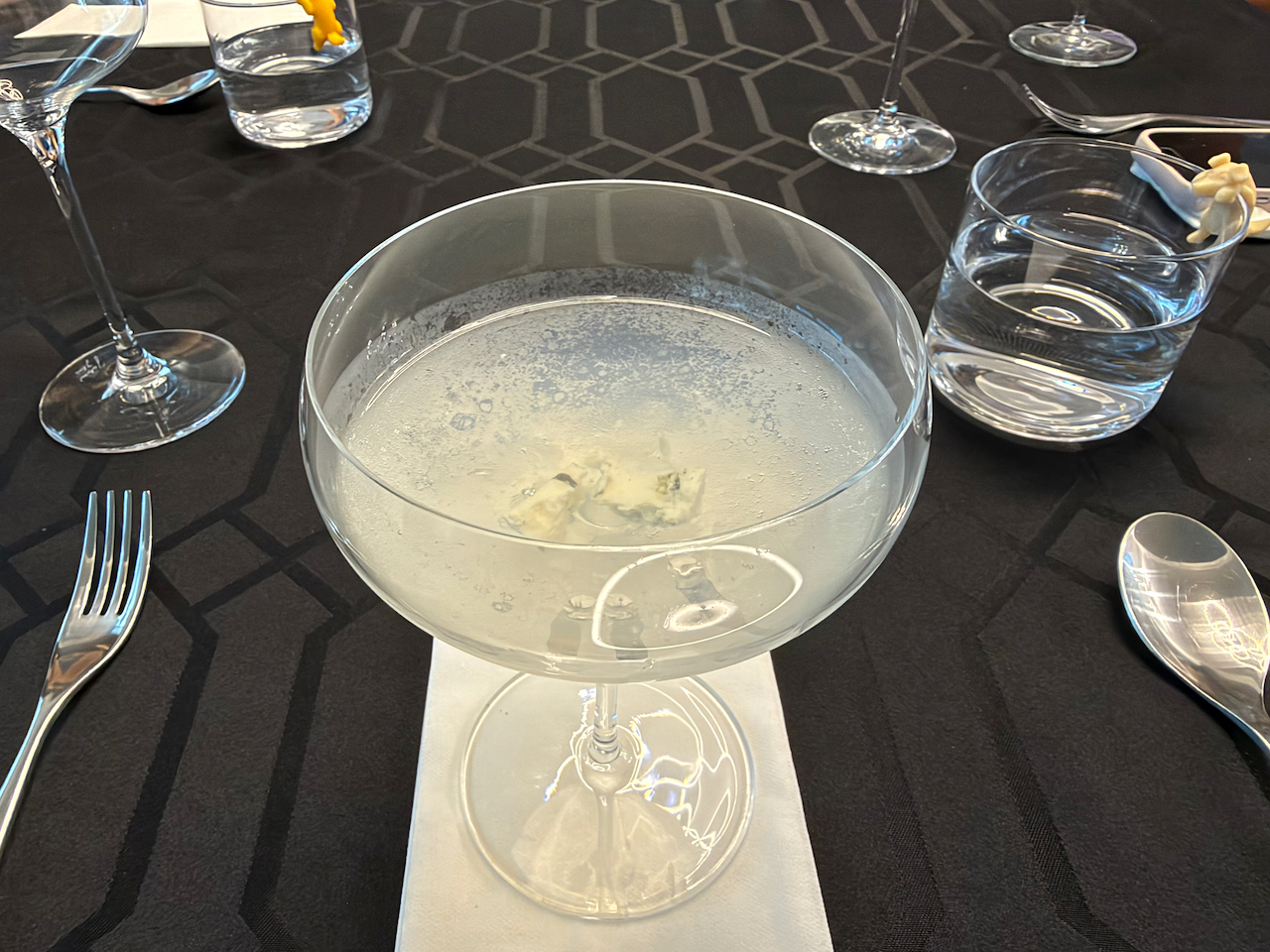
I did not have dried orange rind for the vermouth infusion as the recipe called for, so I used fresh orange zest instead. What I found was that the wonderful orange smell dissipated over time, so next time I would time the blue cheese infusion to finish on the day of service so it is at its freshest.
Beet Salad
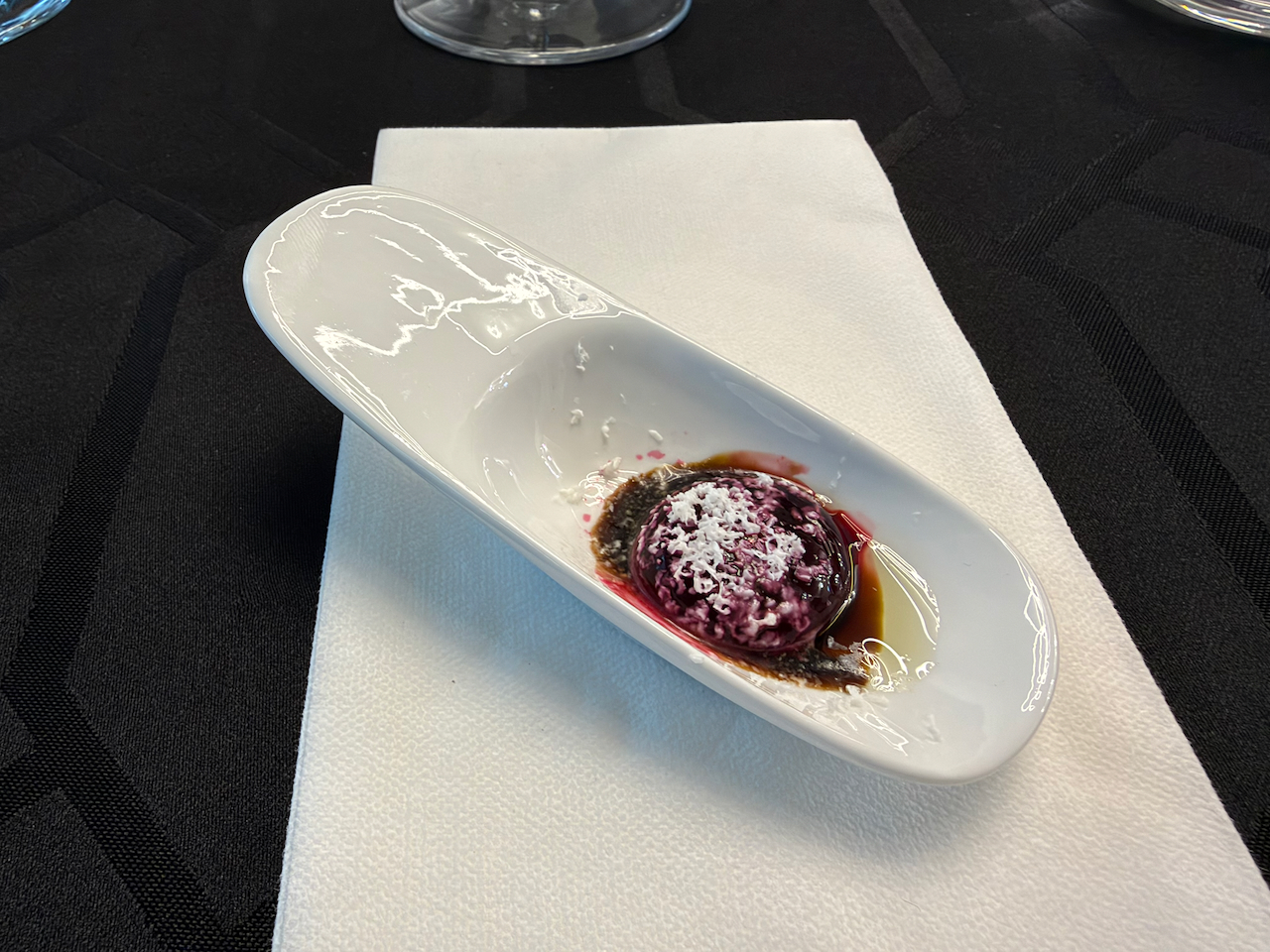
This course was a throwback to the very first multi-course dinner that we made at home a full 10 years ago. It is a ChefSteps recipe that uses a beet juice sphere with balsamic vinegar, habanero olive oil, and some shaved goat cheese to give you all the flavours of a beet salad in a single mouthful.
Pulao Arancini
This was a dish that Nithya has wanted to make for a long time, but we never got around to actually doing it. The original plan was to make biryani arancini, but when we made some test samples we found that the biryani flavour didn’t really stand out against the panko crust. So instead Nithya made some pulao and mixed it with mozzarella cheese to make the filling for the arancini.
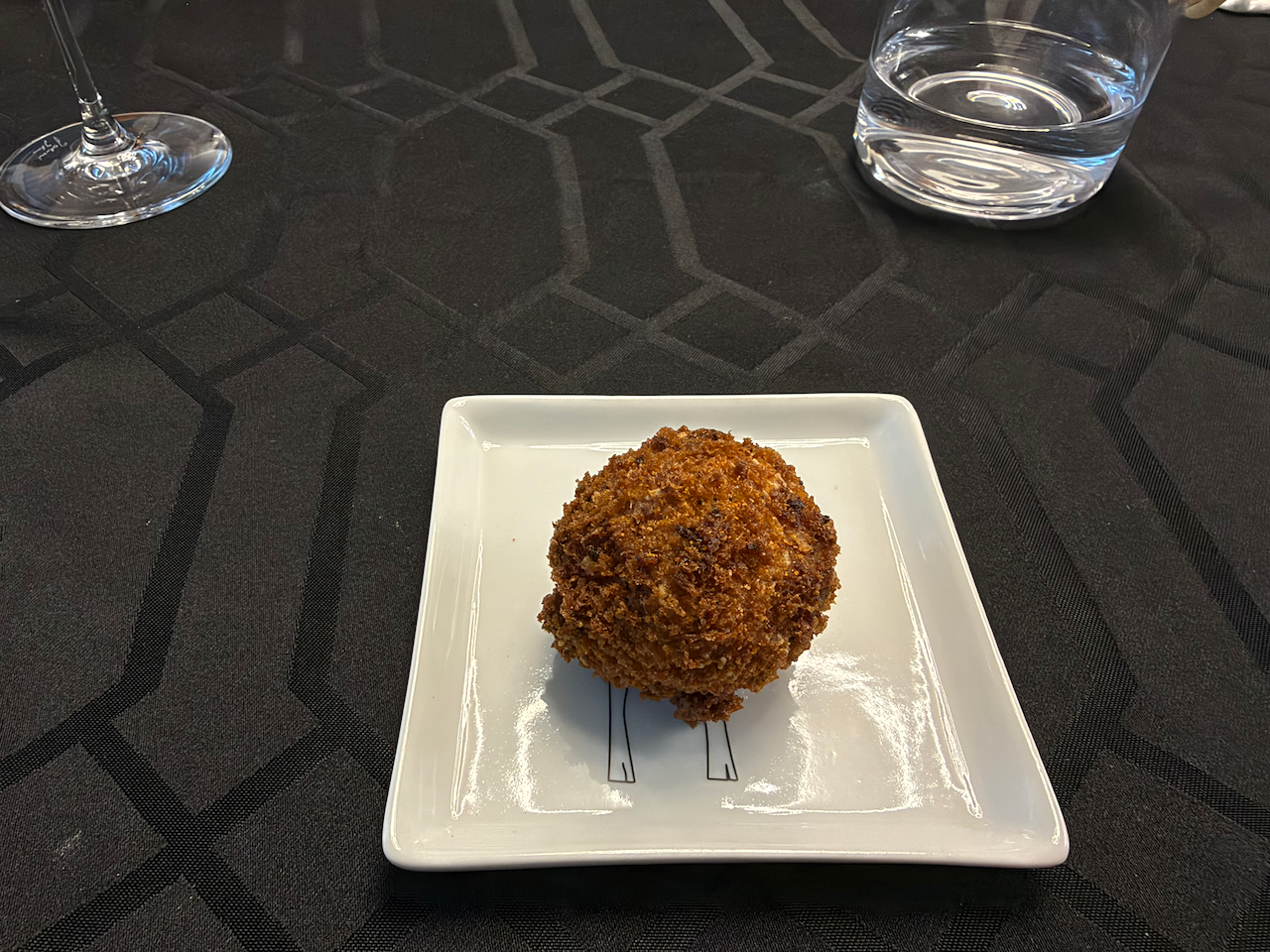
We also spent quite a bit of time debating various sauce options like mint, ponzu, tomato, etc., but in the end we let it stand by itself.
The flavours of the traditional pulao felt like a much better contrast than the original biryani, and it was quite a successful dish. The crunch from the crust contrasts well with the soft rice inside, and you don’t expect to get Indian flavours inside such a traditionally Italian dish.
Cauliflower and Gruyère Mousse
When I read the recipe for Cauliflower and Gruyère Mousse, I immediately knew it was something that I would have to try.
I started out by making the cauliflower and Gruyère cream and loved its rich, creamy texture. It was a little too rich to have as a liquid, but once it was converted to a foam it was just perfect.
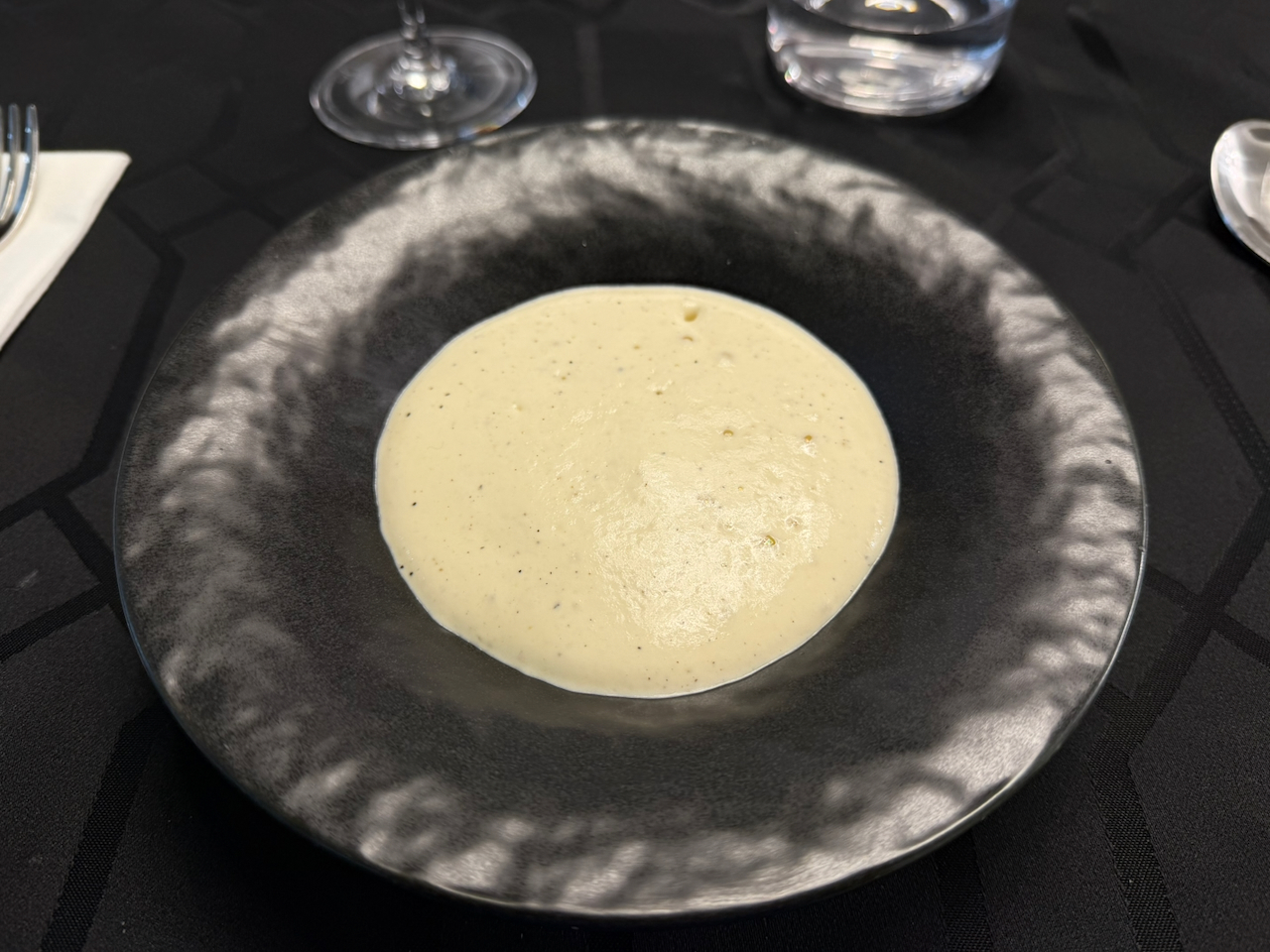
The recipe also called for a sunchoke puree, but since they were out of season I went with a regular store-bought artichoke dip instead. My original plan was to blend the dip to make a fine puree, but I found that having the texture of bits of artichoke at the bottom of the foam was much more interesting than having a uniform puree underneath.
A fairly easy dish to build and definitely something I will be making again.
Malfatti
Malfatti is an Italian spinach dumpling that literally translates to “badly made.” It was also a good fit for a cheese menu because ricotta cheese is incorporated into the dumpling rather than being treated as a sauce or garnish.
I started out by making a test batch using this recipe from Great Italian Chefs, which pairs malfatti with a simple tomato sauce. While the texture was pretty good, we felt that the malfatti themselves were fairly bland. The tomato sauce was also a little too tomatoey and didn’t pair particularly well with the spinach. So for the final dinner I took the base recipe and made a few changes to it:
- Halved the amount of ricotta and doubled the amount of Parmesan so that there was more of a sharp cheese flavour.
- Sautéed the spinach with garlic to give the dumpling some additional flavour from the spinach portion.
- Skipped the tomato sauce and instead made a brown butter sauce by heating butter until it was foaming and then frying some fresh sage in the butter until the milk solids were fully browned.
- Once the malfatti came out of the water, I let them dry off for a minute and then fried them in the pan with the butter sauce while basting them to give them a nice brown colour all around.
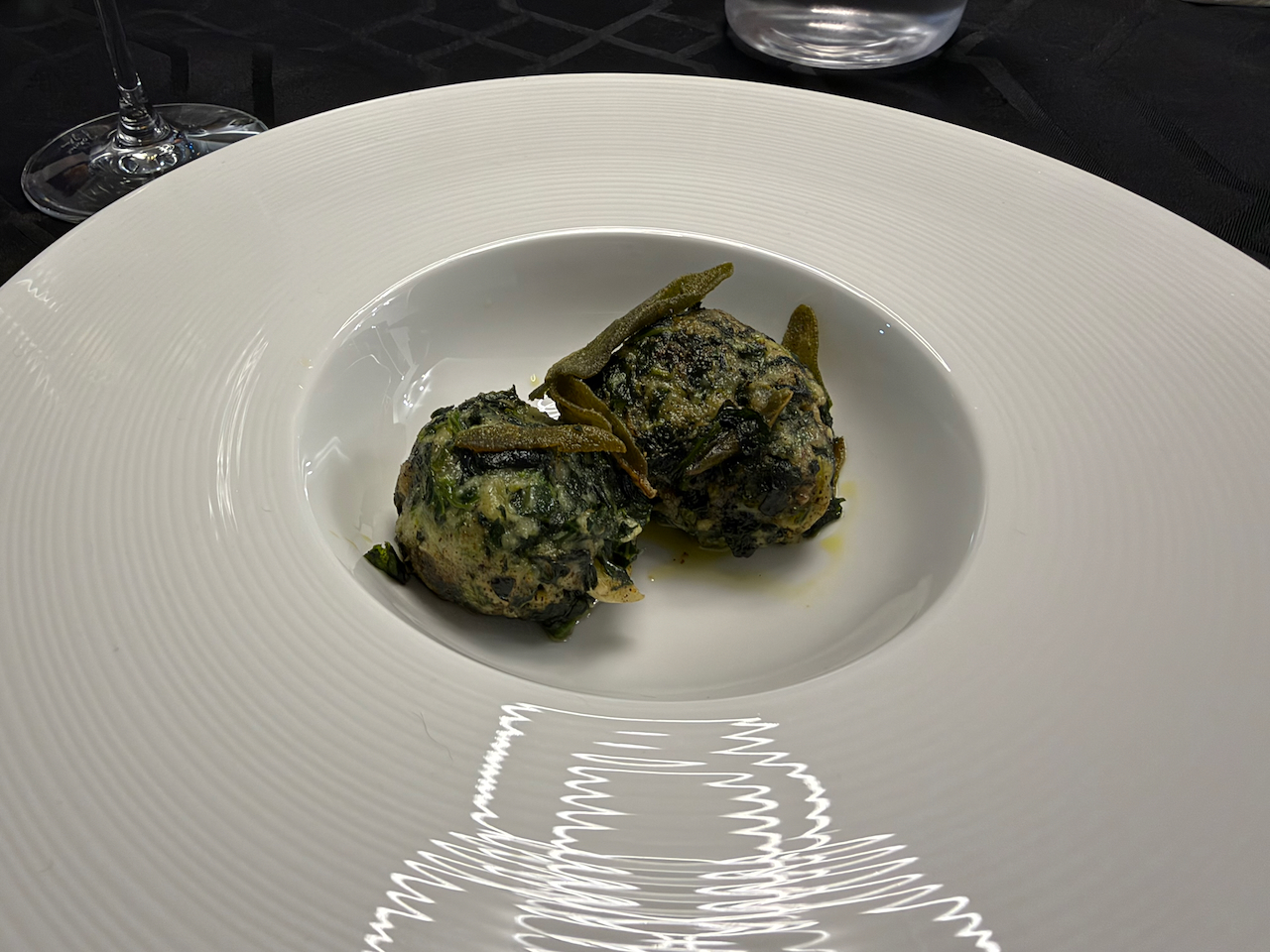
I served everyone a couple of malfatti with some of the crispy sage and a spoonful of the butter sauce to finish the dish. This was Nithya’s favourite course of the meal. It’s simpler to make than fresh pasta and, while vegetarian-friendly, I can imagine adding some pancetta to the sauce to bump up the flavour and texture even more.
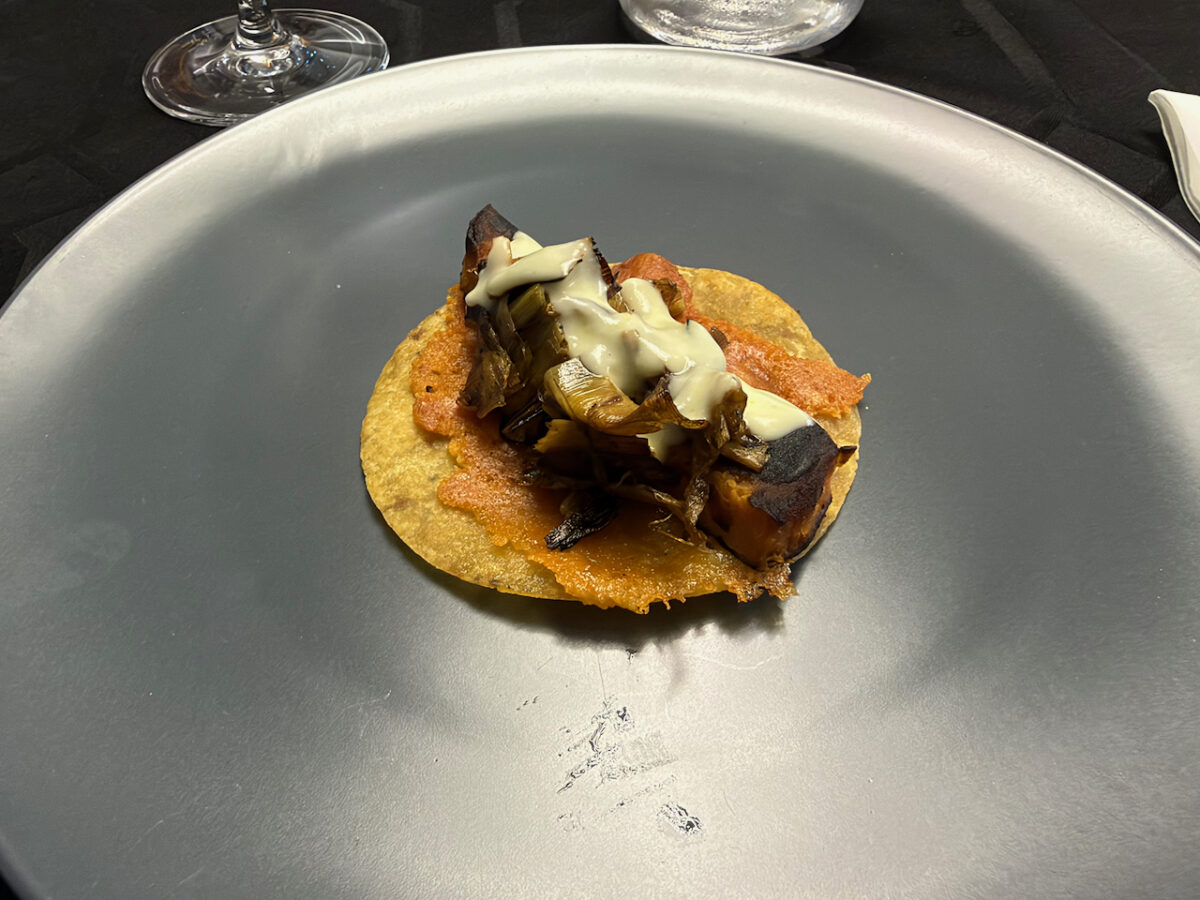
Sweet Potato and Leek Taco
The taco course was sweet potato and leek with an Oaxaca-cheese crust and a Serrano cheese sauce. The recipe for the main taco itself is listed in my notes from the potato dinner, and in order to up the cheesiness a bit I added this Serrano cheese sauce from ChefSteps.
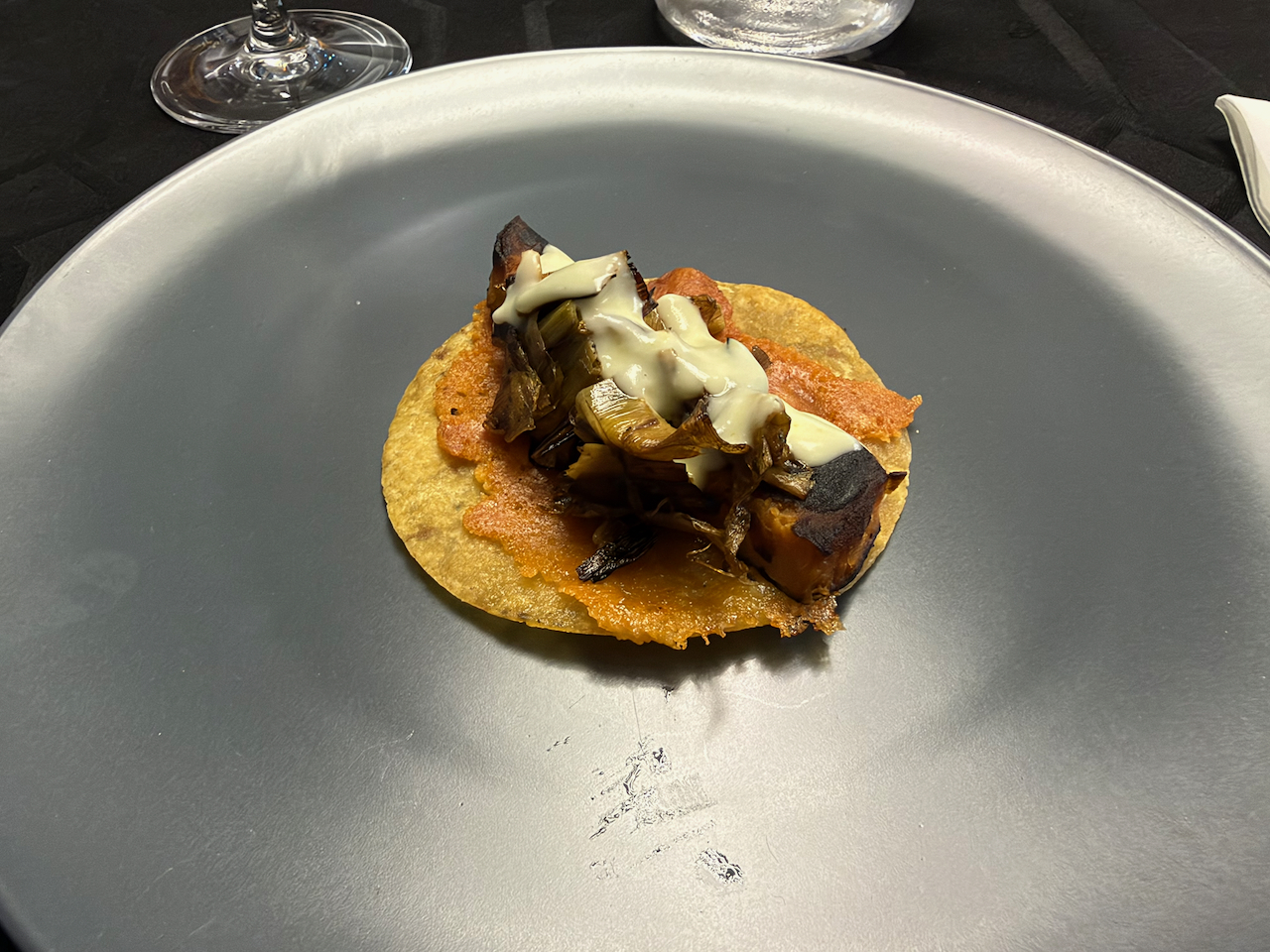
The cheese sauce was quite interesting. I made it a couple of days before the dinner and it was very spicy at the time. However, we found that each time we heated it up for service it would lose a bit of spice. Some of the leftover sauce had lost all its heat by the fourth reheating, though it did maintain its Serrano flavour. If you decide to make the sauce, I recommend heating it up just once after preparation.
This was one of the more playful dishes on the menu and another case where the cheese was doing two completely different jobs. The Oaxaca cheese formed the crust while the sauce brought in another layer of cheese underneath it.
The sweet potato gave the taco enough substance to work as a vegetarian course, while the leek helped keep the filling from becoming entirely sweet and rich.
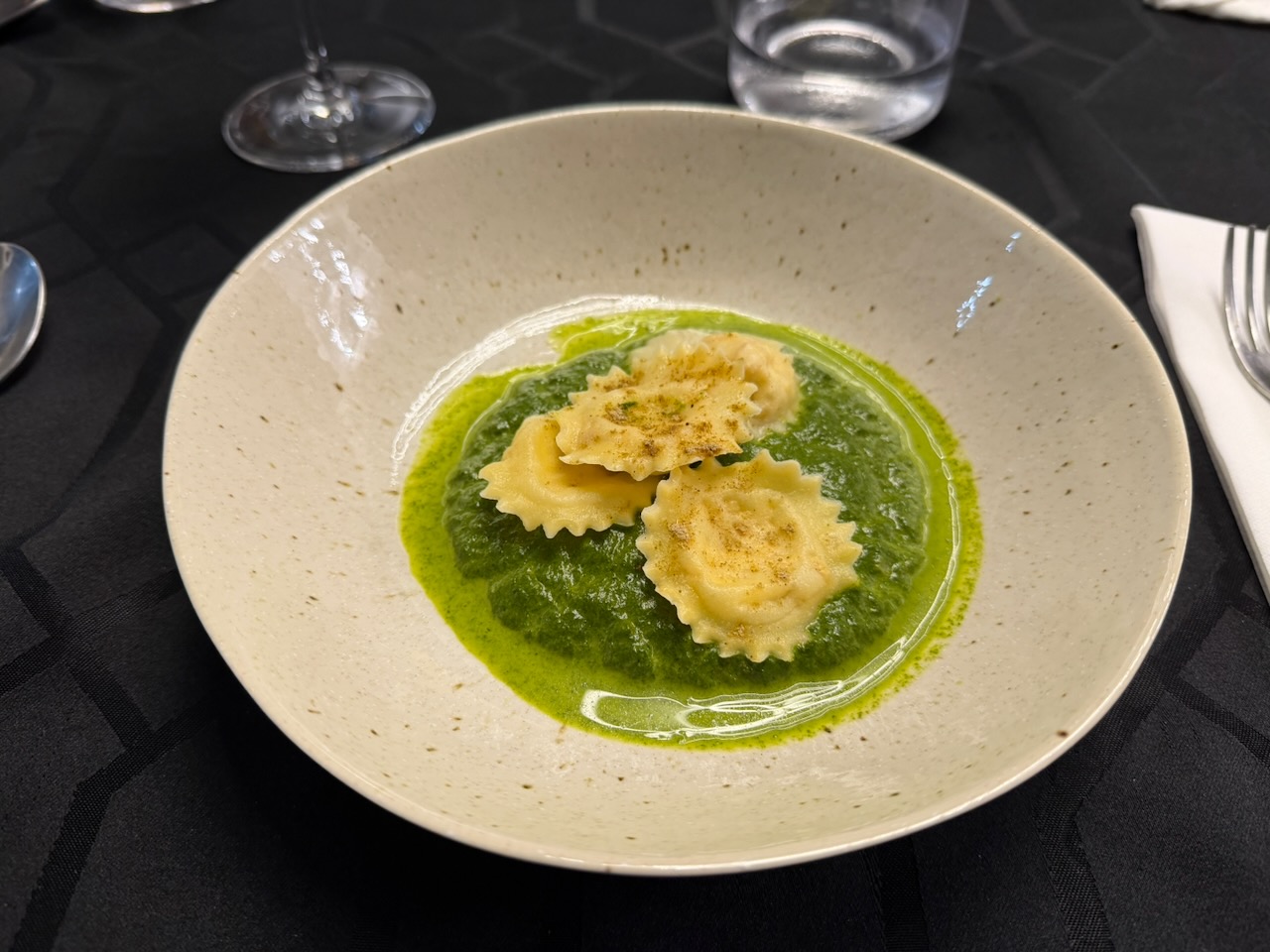
Palak Paneer Ravioli
This is a recipe that I first created for the protein dinner earlier in the year, and I used this dinner to finally document the whole recipe as a separate post. It is relatively straightforward to make, and using the palak as the sauce gives everyone a nice surprise when they cut into the ravioli and find the paneer inside.
Massimo Bottura Cacio e Pepe Risotto
This was another dish that I first made for the protein dinner earlier in the year. I have documented the full recipe in a separate blog post.
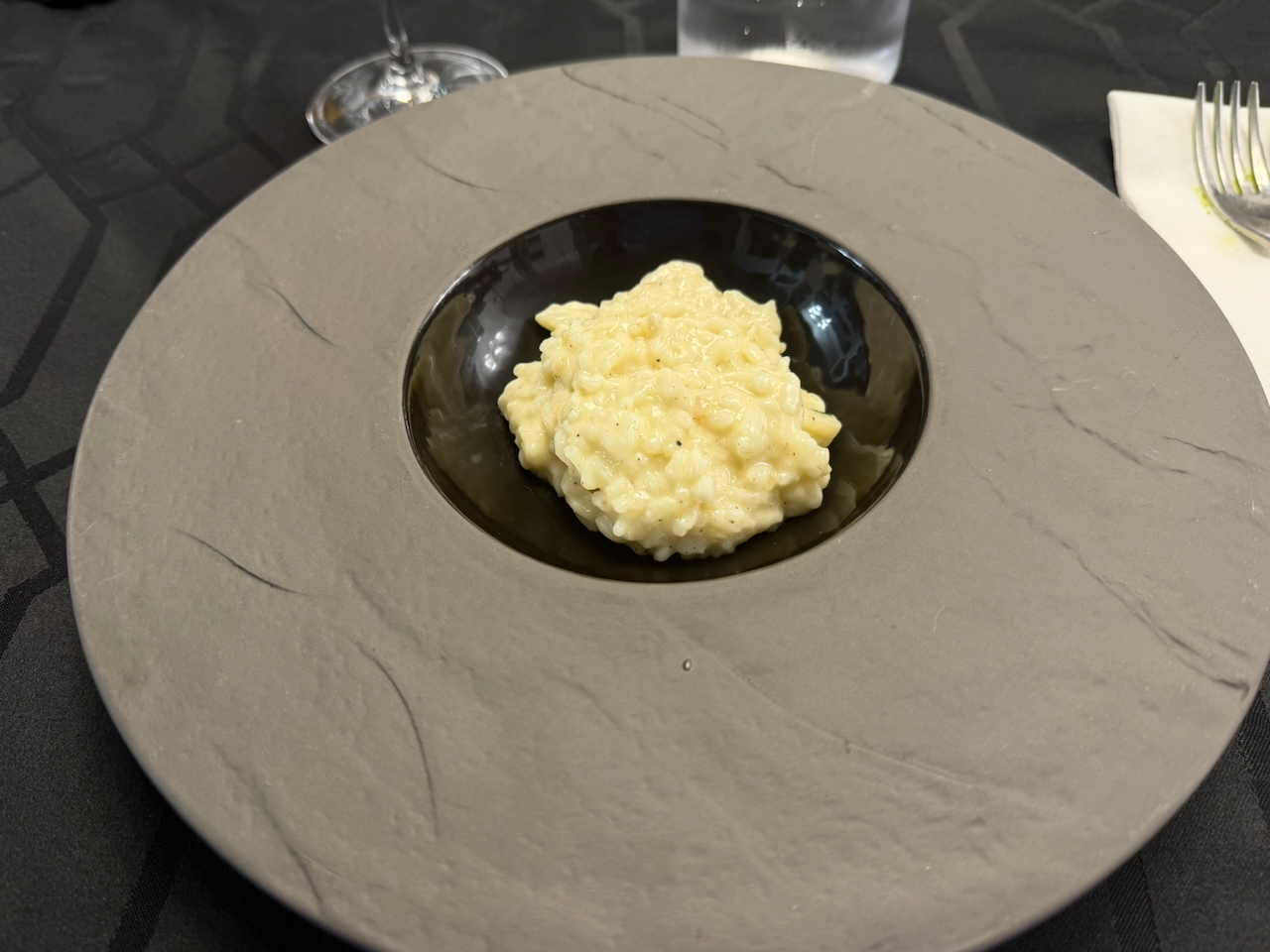
It is a bit of a hassle to make the Parmesan stock and cream, but the risotto itself is so easy to make sous vide that it’s a pretty great fit for a multi-course dinner without having to spend 30 minutes at the stove stirring the rice.
This is a very rich dish, so once again the serving size was intentionally small. A little cacio e pepe risotto goes a long way, particularly when it is course eight of ten.
Black Truffle Explosion
The final savoury bite was the Black Truffle Explosion from Alinea. This was my second time making it, and you can see much more detail about it in my notes from the pasta dinner.
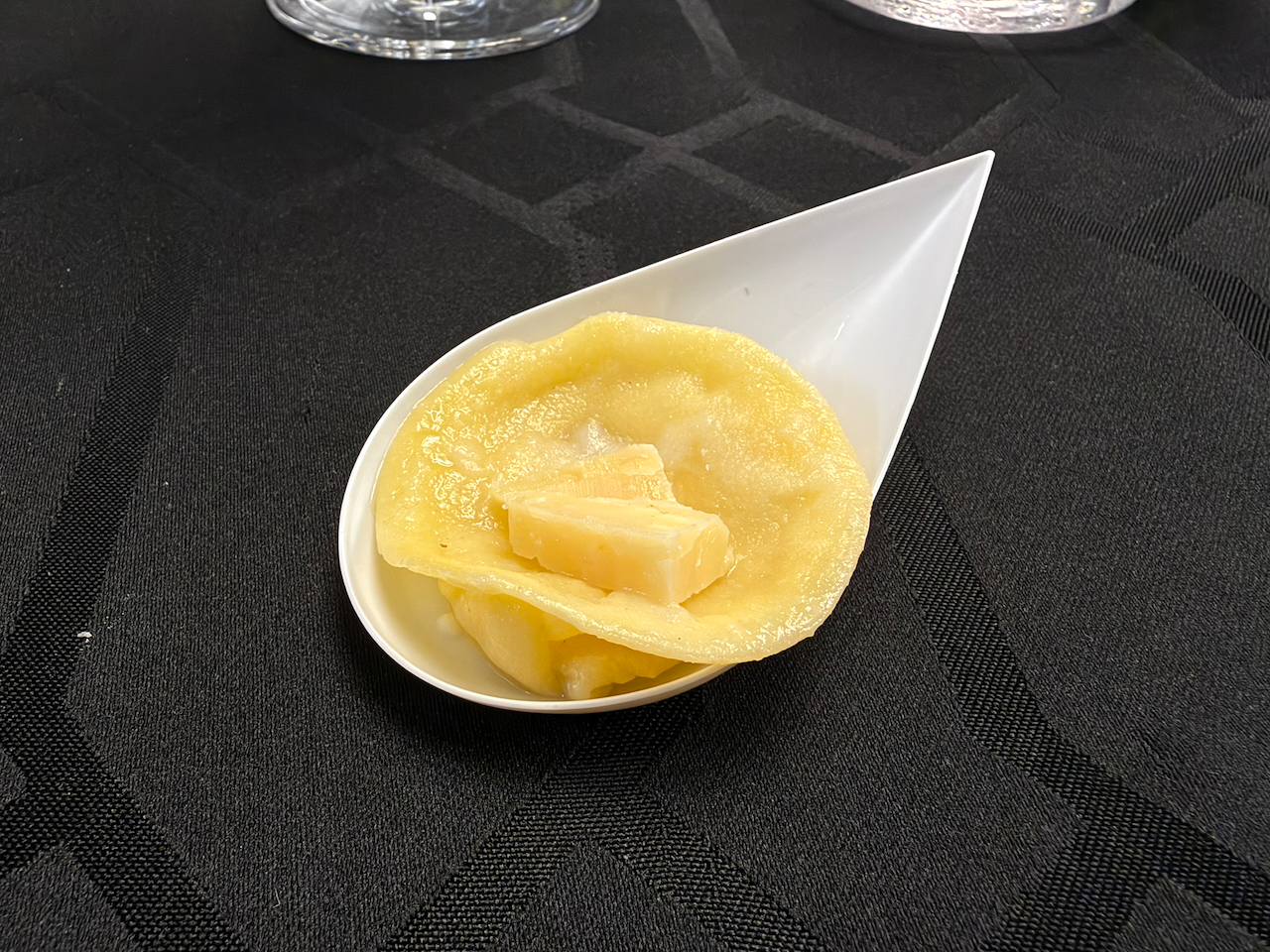
This time it was easier since I had frozen a bunch of the spheres from the last time, so all I had to do was make the ravioli. One thing I did learn is that you really should use cornmeal as the base for the raw ravioli when you store them in the fridge before service. I used regular flour and several of the ravioli had the pasta tear, leading to a lot of wastage. Lesson learned for next time.
This time I did not use fresh truffle, and while it isn’t as “luxurious” without it, the dish still gives diners a wonderful surprise.
Japanese Cheesecake
For dessert Nithya made some Japanese cheesecake using the ChefSteps recipe. It was a particularly good fit for this menu because it gave me the obvious cheese-based dessert without ending a very long dinner with something as dense as a traditional cheesecake. After nine previous courses, being lighter was a great choice.
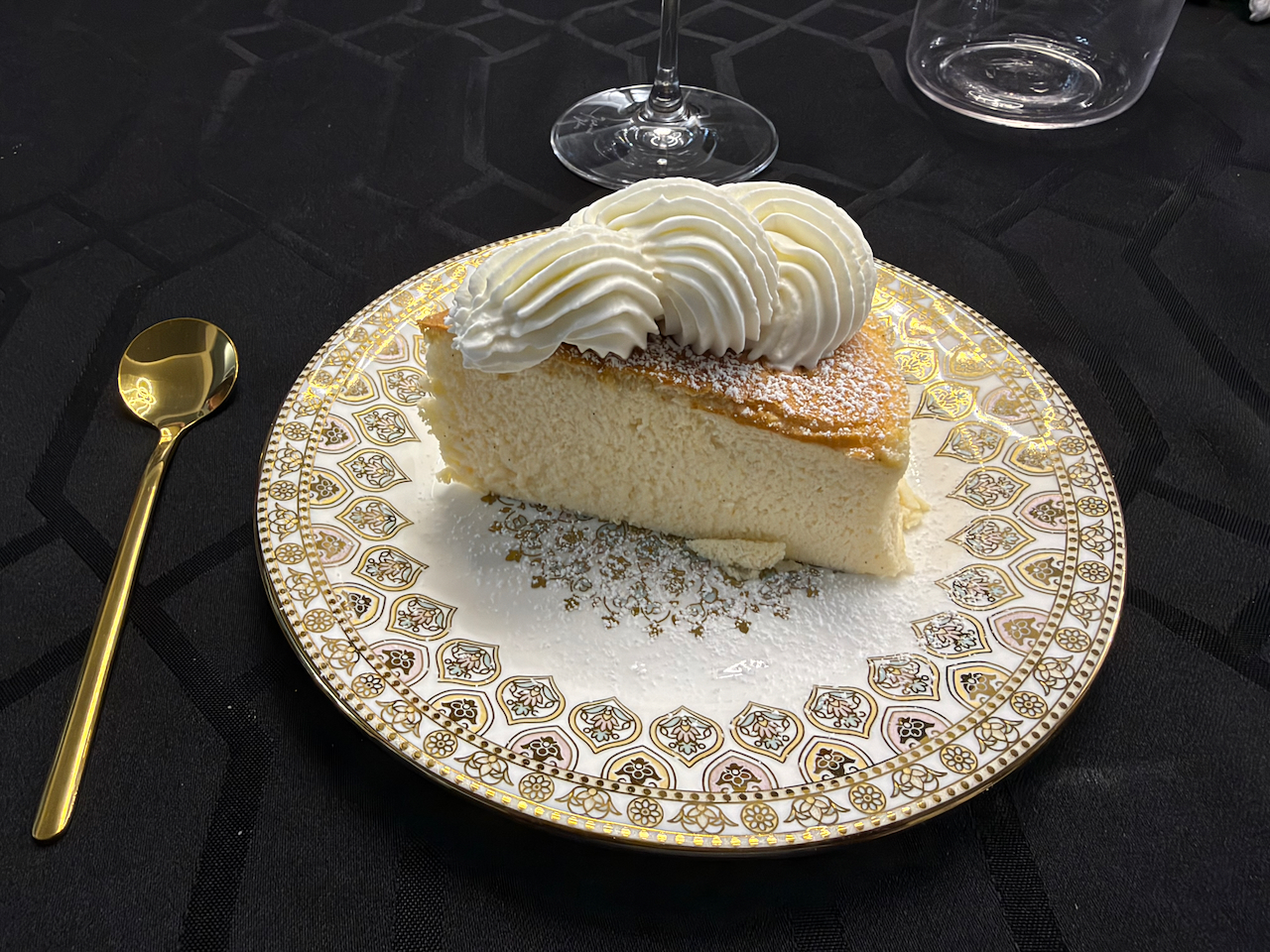
The texture was just fantastic, and she added some yuzu whipped cream, which brought in some citrus to cut through the richness. A very successful dish, and we ended up making it again the next day when we had some family over.
Overall, the cheese theme worked better than I expected. I was initially worried that an entire dinner based around cheese would become oppressively rich, but using cheese in different forms made it possible to keep the courses surprisingly varied. Sometimes it was the main component of the dish, while elsewhere it was a foam, sauce, filling, or garnish.
