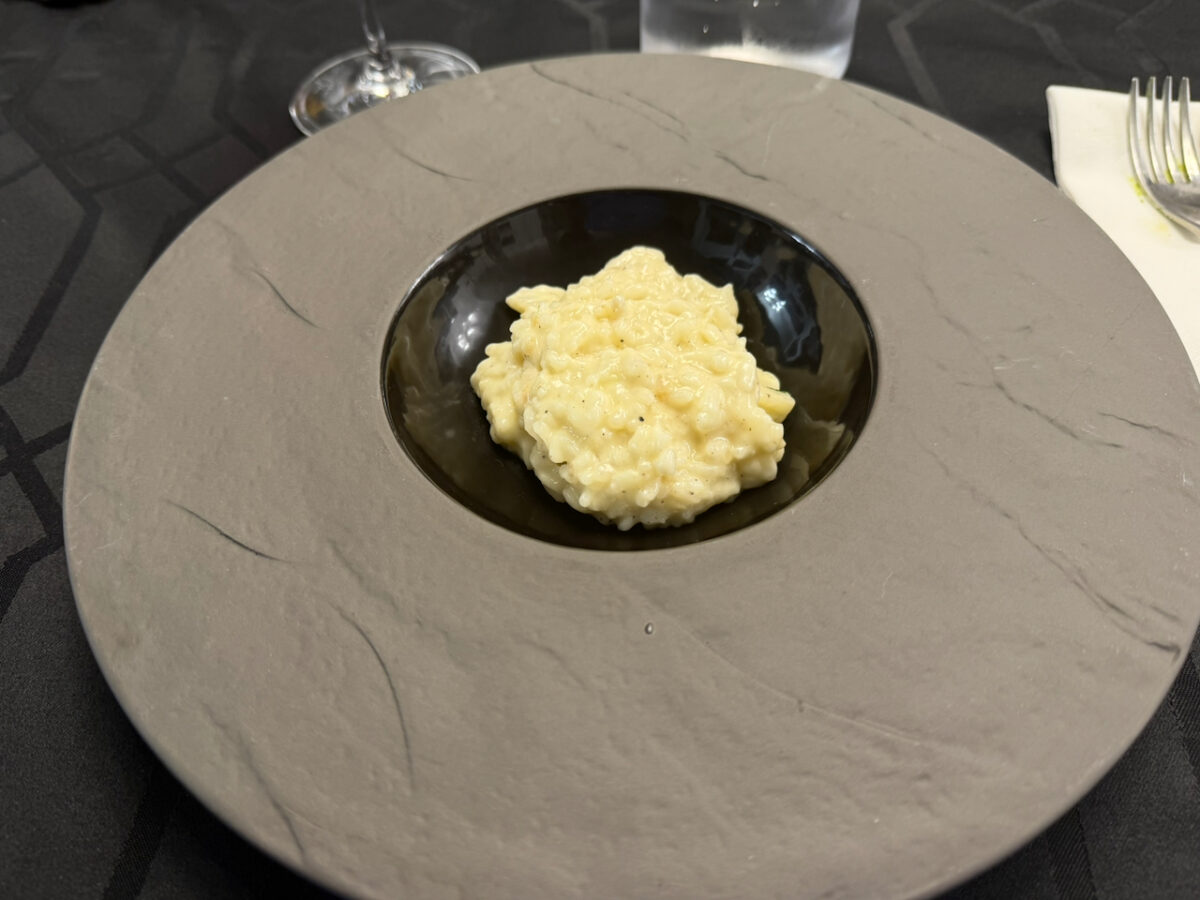
I have been a fan of Massimo Bottura since I first saw him on Chef’s Table many years ago, and his cacio e pepe risotto is one of those dishes that I have wanted to make ever since.
The original dish was created after the 2012 earthquake in Emilia-Romagna damaged a huge amount of Parmigiano Reggiano. Bottura came up with the risotto as a way to help encourage people to buy and use the affected cheese. The resulting recipe takes the basic idea of cacio e pepe and turns it into a risotto built around an intensely flavoured Parmesan stock and cream.
The problem for me is that the traditional recipe is fairly labour intensive. That is fine if the risotto is the focus of dinner, but much less convenient when it is one course in the middle of one of my multi-course meals. Standing over the stove adding stock and stirring rice for 30 minutes is exactly the sort of thing I try to avoid during service.
So I decided to take the Parmesan stock and cream from the Bottura recipe but cook the actual risotto sous vide using the ChefSteps recipe as a baseline guide. The result gets you the flavour and texture of the original dish with very little of the last-minute work.
Parmesan Stock and Cream
For this part I follow the Massimo Bottura recipe fairly closely.
You will need:
- 1kg Parmigiano Reggiano, grated
- 2L water
The original recipe calls for 30-month Parmigiano Reggiano and mineral water. Use the best Parmesan you are willing to sacrifice to the cause because there is an alarming amount of cheese involved.
Put the grated Parmesan and water into a large pot and slowly heat the mixture to around 80°C / 176°F. You do not want to boil it.
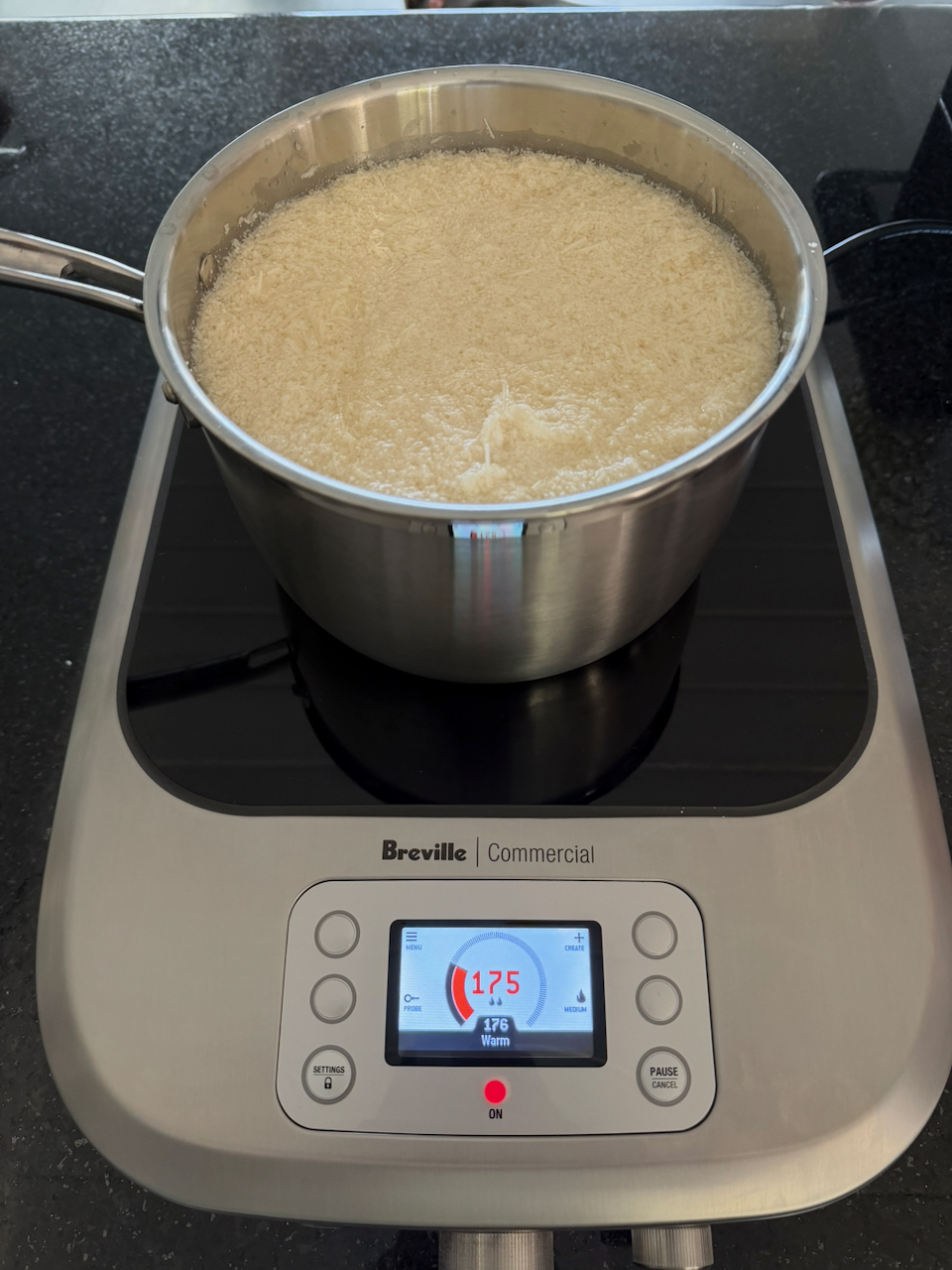
As the mixture heats, the cheese will start to melt and become stringy.
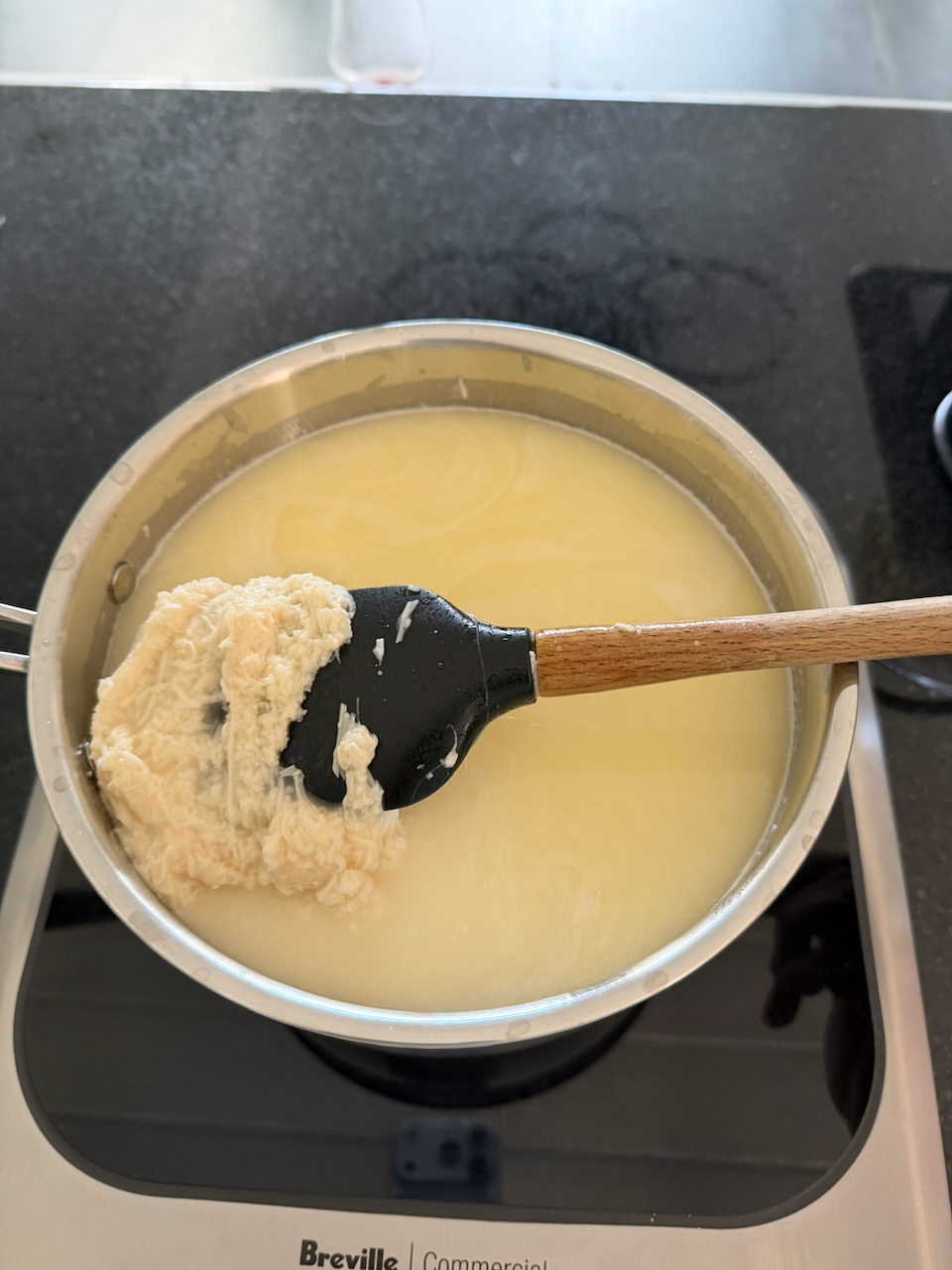
Once it reaches temperature, remove it from the heat and allow it to cool back down.
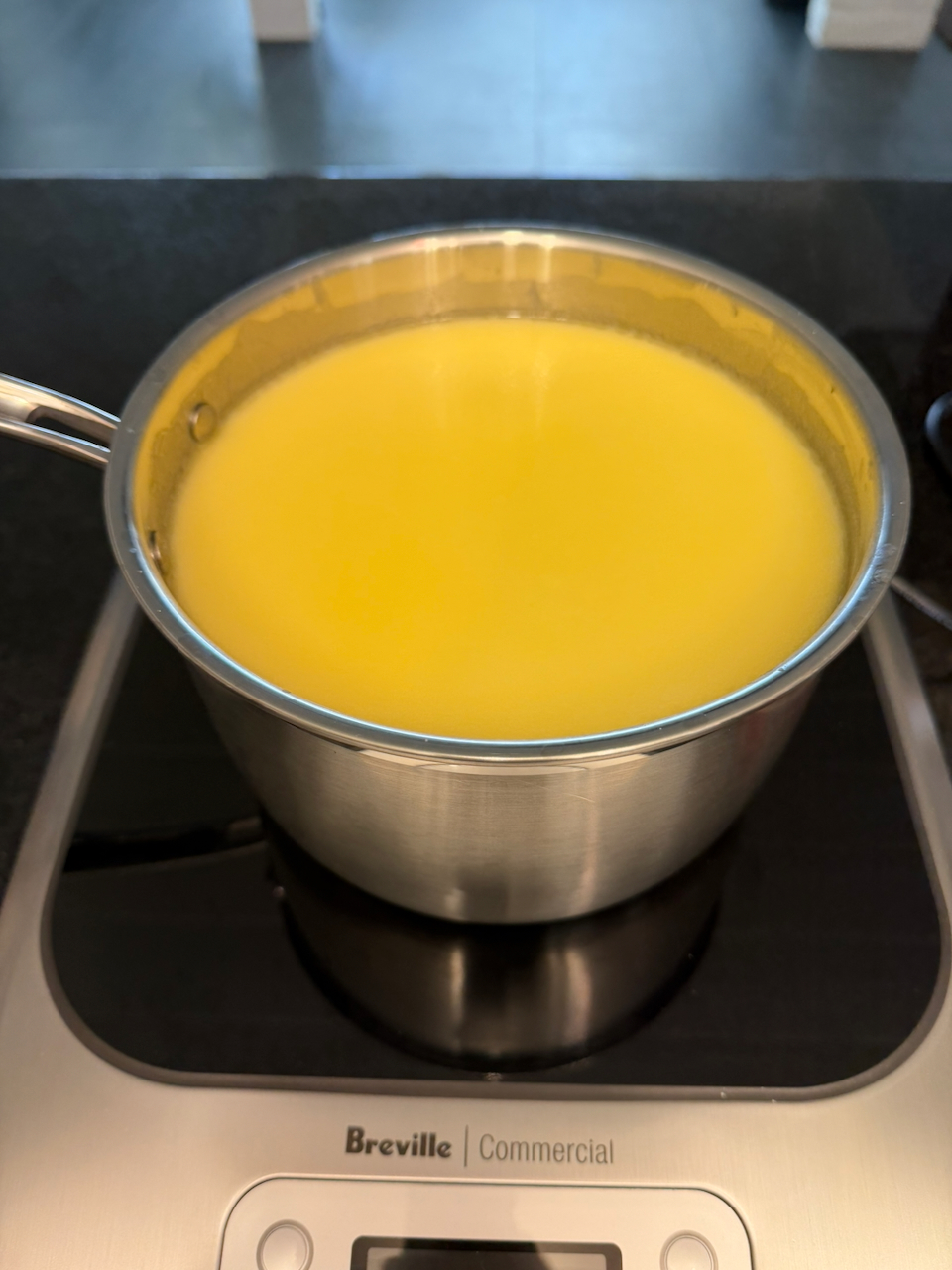
Repeat the heating process one more time, bringing it back to around 80°C / 176°F, and then allow it to cool again.
Transfer the whole mixture to the refrigerator and leave it overnight.
The next day the mixture will have separated into several very distinct layers. This is where the recipe gets interesting.
At the top you will have a thick Parmesan cream. Underneath that is the milky Parmesan stock that we will use to actually cook the rice. At the bottom are the remaining cheese solids.
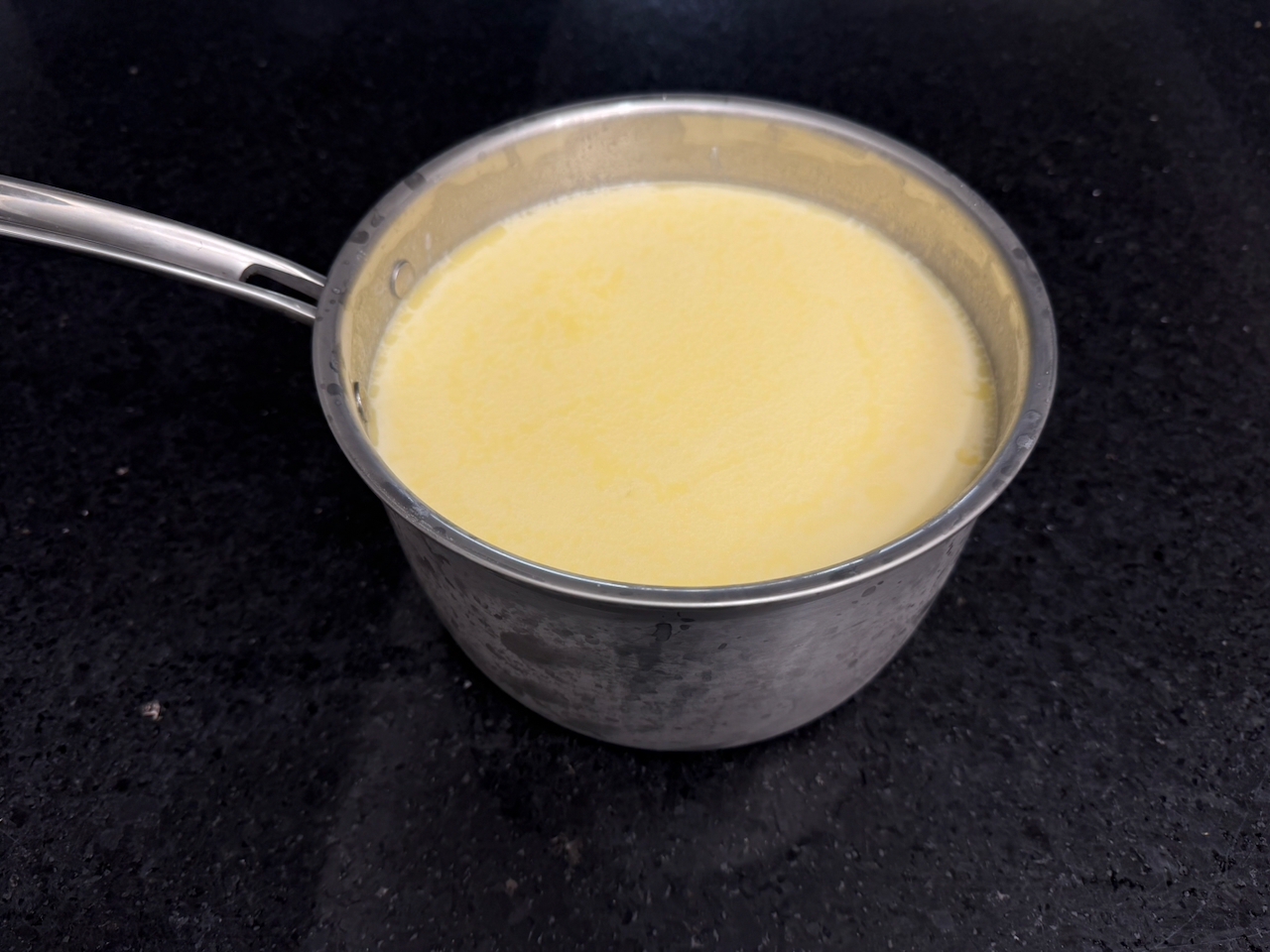
Carefully remove the Parmesan cream from the top and reserve it separately.
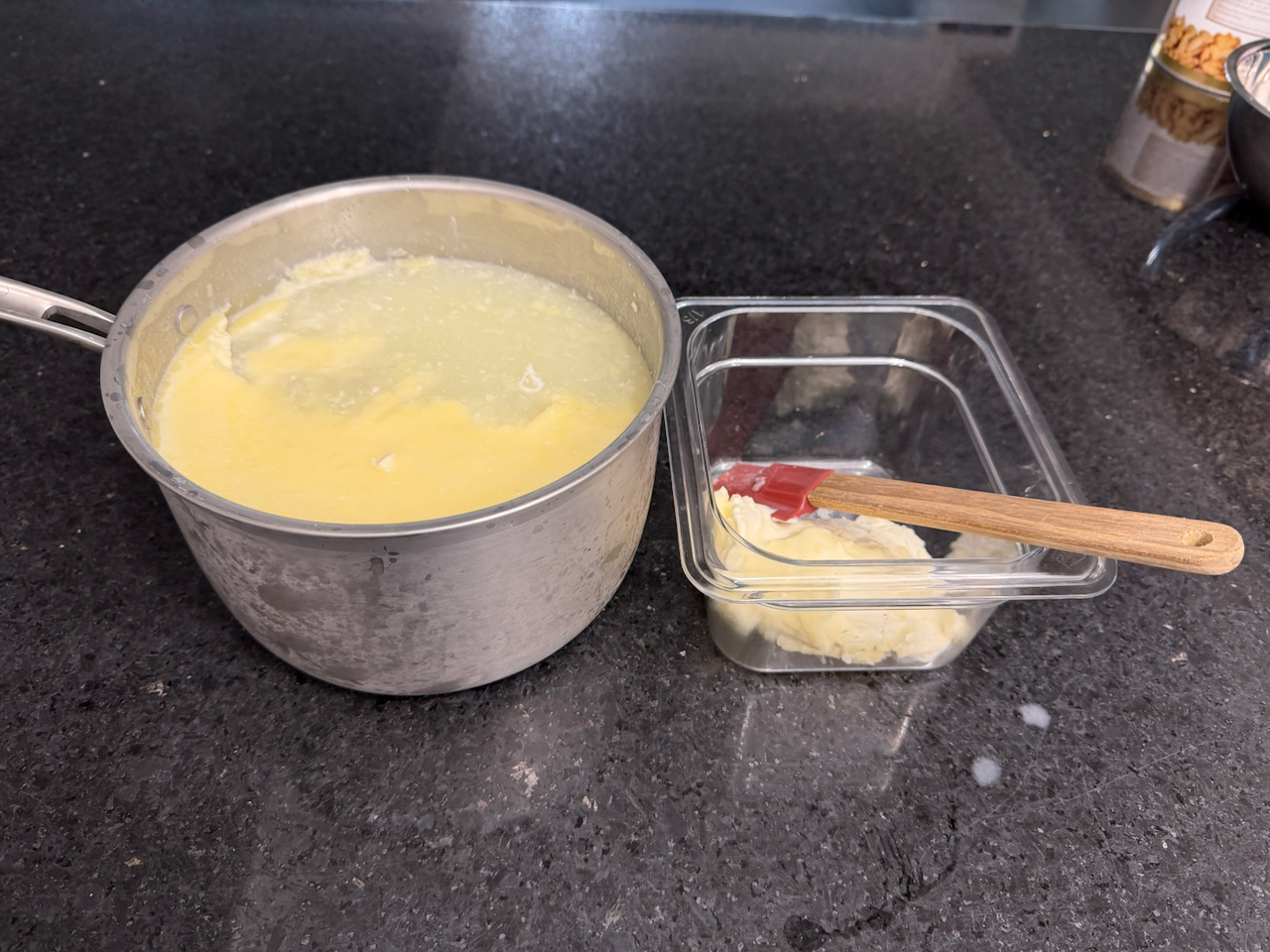
Then strain the liquid Parmesan stock into another container.
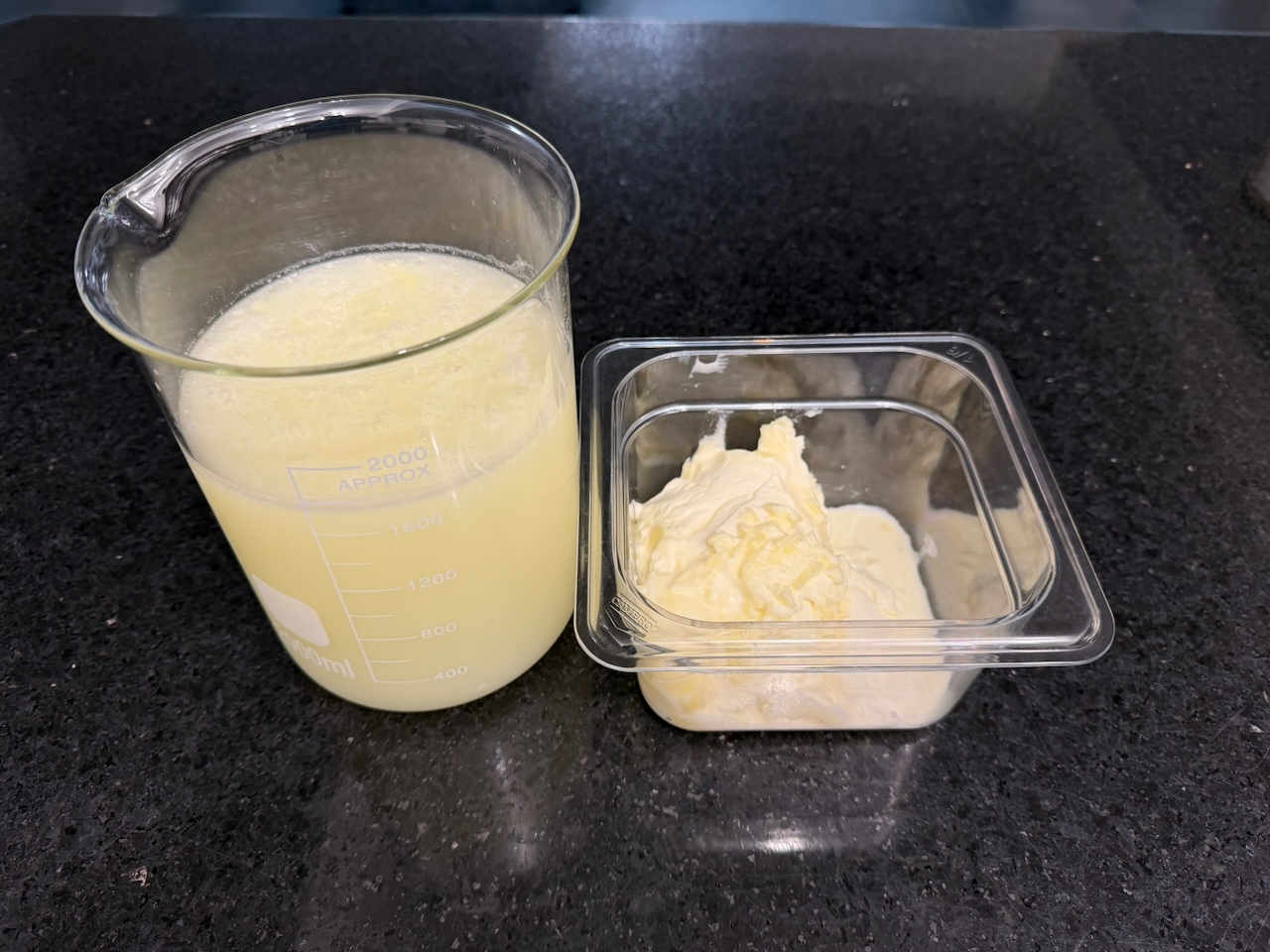
You can discard the solids at the bottom.
The stock and cream can both be made ahead of time and refrigerated until you are ready to make the risotto.
The original Bottura recipe goes considerably further than this and also makes a pepper distillation and pepper oil. I skipped those parts and instead use finely ground black pepper directly in the risotto.
Sous Vide Risotto
For the risotto itself you will need:
- 200g Arborio or Carnaroli rice
- 600g Parmesan stock
- 1g black peppercorns, finely ground
- Approximately 120g Parmesan cream
- 1 tbsp butter
- 1 shallot, finely minced
- 2 cloves garlic, finely minced
- Salt, as needed
- 1–2 egg yolks, room temperature, optional
The useful thing about this method is that it scales very easily. The basic ratio is 1:3:0.6 for rice, Parmesan stock, and Parmesan cream. So for every 100g of rice, use about 300g of stock and 60g of Parmesan cream.
The exact amount of Parmesan cream is still something I adjust slightly based on the final consistency and flavour, but the 1:3:0.6 ratio is a very good starting point.
Heat the Sous Vide Bath
Set your sous vide bath to 98°C / 208°F if your circulator can reach it. My old Kickstarter Anova actually reaches 98°C, but my newer Anova only reaches 95°C, which still works with a slightly longer cooking time.
Bag the Risotto
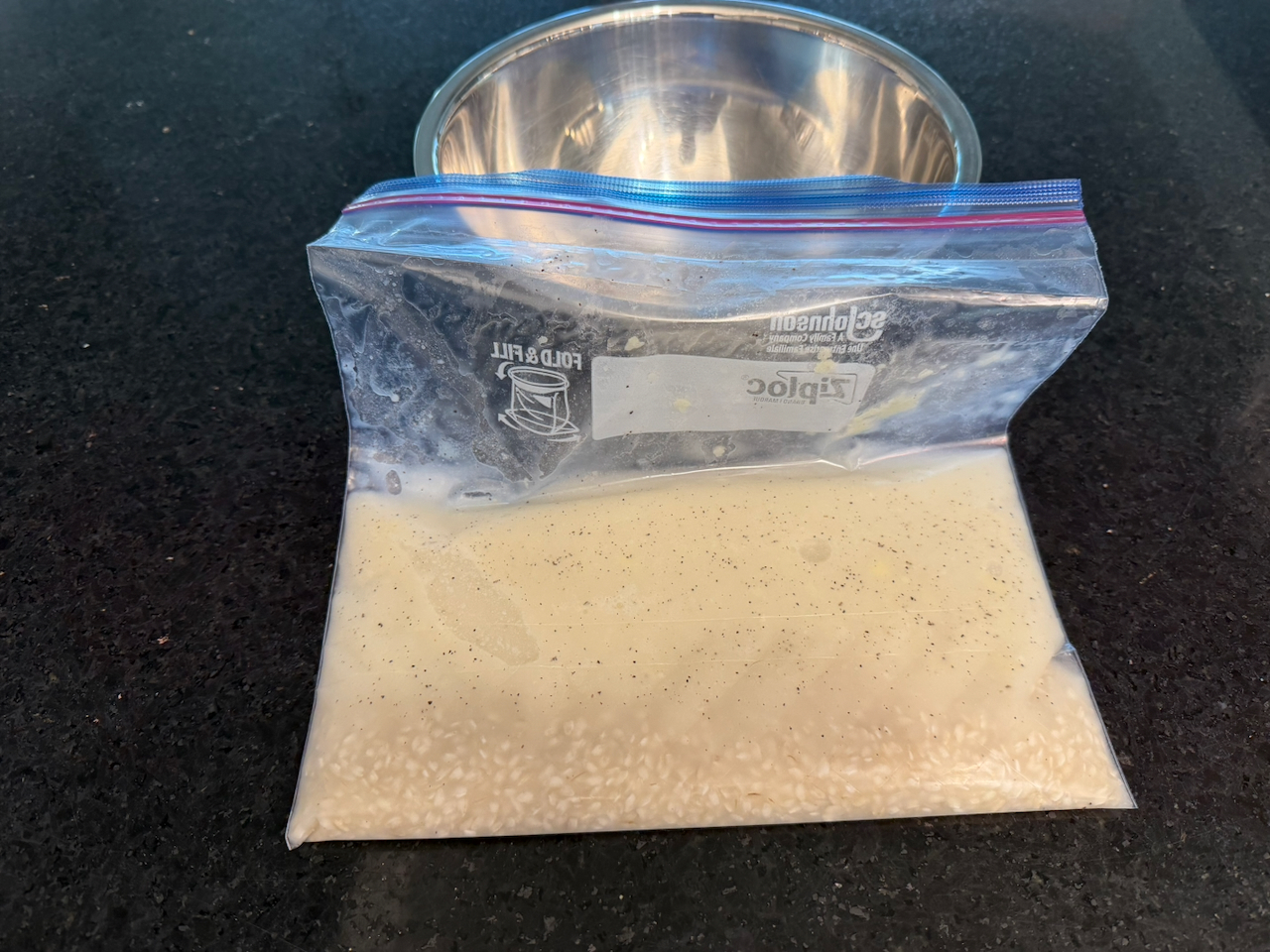
Add to a sous vide bag:
- 200g rice
- 600g Parmesan stock
- 1g finely ground black pepper
Seal the bag, or use a heavy-duty freezer bag and remove as much air as possible using the water-displacement method.
Cook Sous Vide
Drop the bag into the 98°C / 208°F water bath and cook for 30 minutes.
About halfway through cooking, carefully agitate the bag to redistribute the rice.
The exact cooking time will depend somewhat on your rice and the maximum temperature of your sous vide bath. At 98°C, 30 minutes has worked well for me. A 95°C bath needs about 40 minutes of cooking time.
While the rice is cooking, prepare the butter, shallot, and garlic.
Prepare Flavours
This step turned out to be critical to getting the right flavour balance in the finished risotto. Without it, the finished dish can come across as overwhelmingly salty.
Melt 1 tablespoon of butter in a saucepan over medium heat.
Add:
- 1 minced shallot
- 2 minced garlic cloves
Cook for about three minutes, stirring regularly, until the shallot and garlic are soft and aromatic.
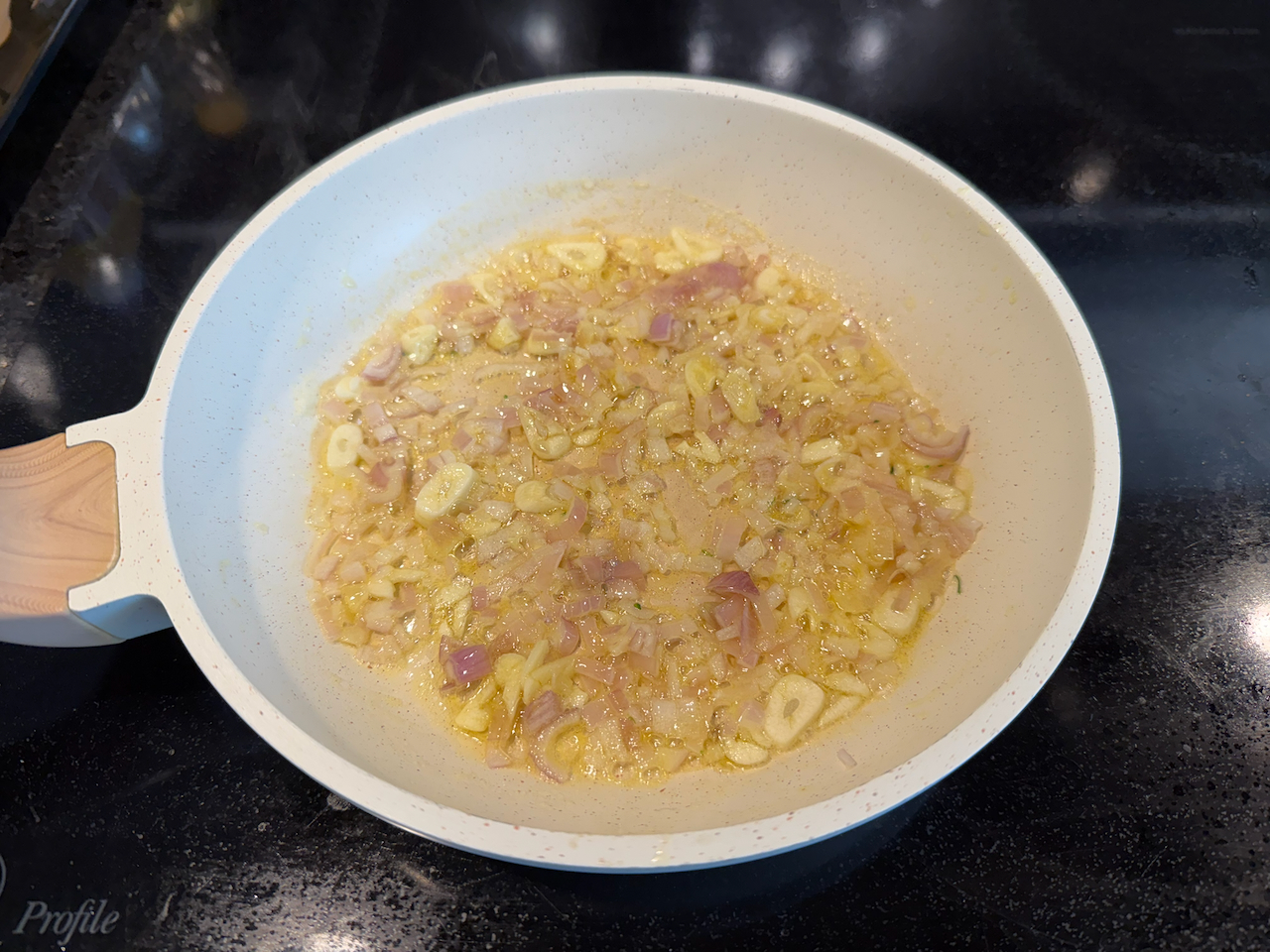
You do not need to brown them. The idea is to infuse the butter with the flavours before mixing it into the finished rice.
Set this mixture aside until the risotto comes out of the sous vide bath.
Incorporate the Parmesan Cream
As soon as the rice has finished cooking, remove the bag from the water and pour the contents into a large mixing bowl.
Immediately add the shallot, garlic, and butter mixture along with approximately 120g of the reserved Parmesan cream.
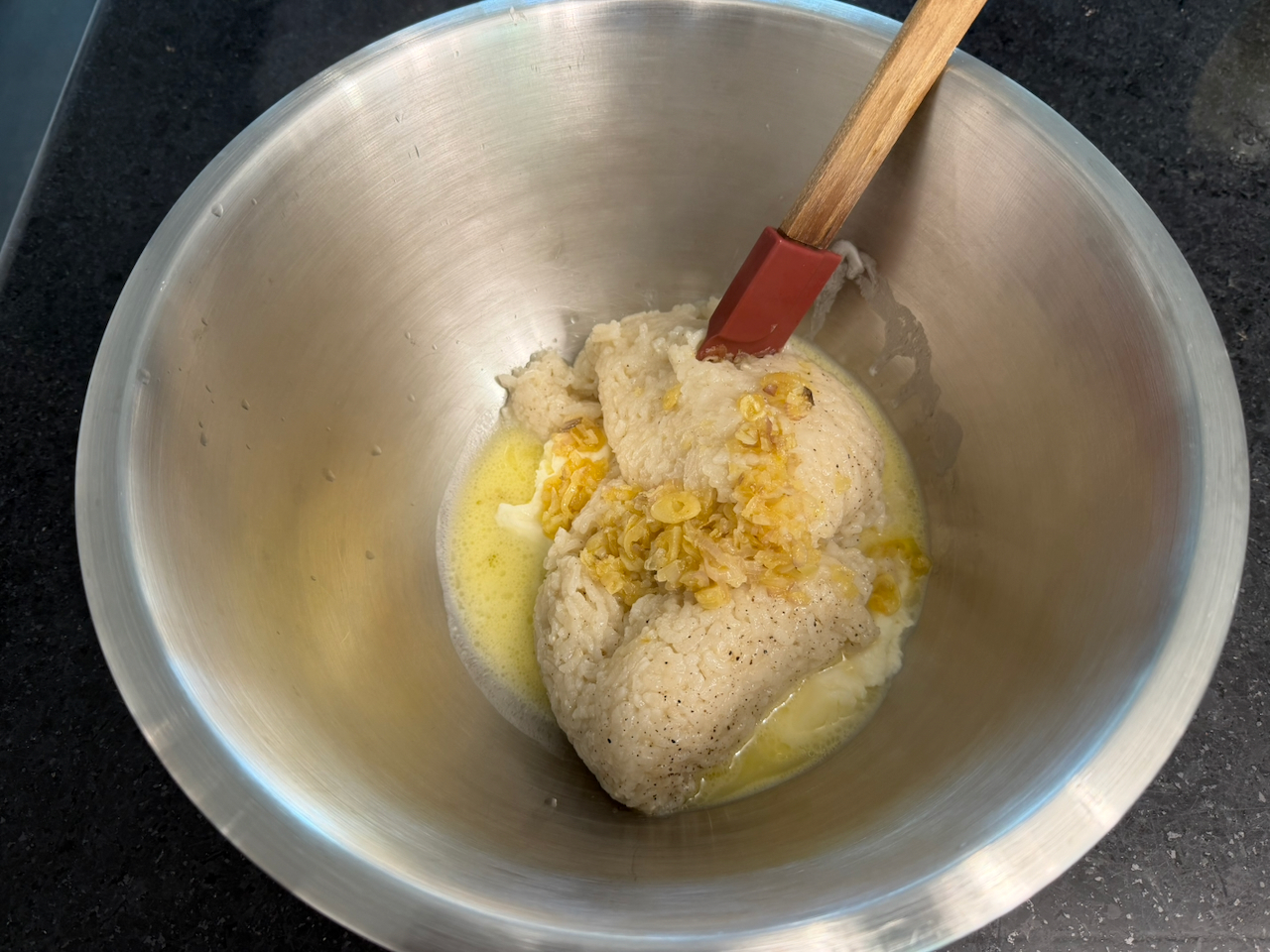
Use a spatula to thoroughly mix everything together for about five minutes. This is the most time-sensitive step and is critical to getting the texture right.
When the rice first comes out of the bag it can look surprisingly loose and almost porridge-like. As you mix it, the starch from the rice, fat from the Parmesan cream, and remaining cooking liquid begin to emulsify. As everything cools slightly, the risotto thickens into the rich and creamy texture that you actually want.
This is one of those recipes where you have to resist the temptation to judge the consistency immediately after opening the bag.
Adjusting the Texture
If the risotto is still too loose after five to ten minutes of mixing, you can add an egg yolk.
Make sure the risotto is still very hot and mix the yolk in quickly and thoroughly. If necessary, transfer everything to a saucepan and gently heat it over low to medium heat while stirring until the yolk thickens the risotto.
I would start with one yolk rather than automatically adding two. Depending on the rice, stock quantity, and amount of Parmesan cream, you may not need any egg at all.
The egg is really a backup for texture rather than an essential part of the recipe.
Seasoning
Taste for salt only at the very end.
This risotto is a little tricky to season because the Parmesan stock and cream already contain a huge amount of cheese, and the perception of salt changes noticeably with temperature.
I found that the risotto needed a little additional salt while it was piping hot, but it can become much saltier tasting as it cools. Add salt very carefully and taste repeatedly.
The black pepper should already be distributed throughout the risotto from cooking in the bag, but you can add more freshly ground pepper at this point if you want a stronger cacio e pepe flavour.
Plating
Serve the risotto immediately while it is still warm and loose.
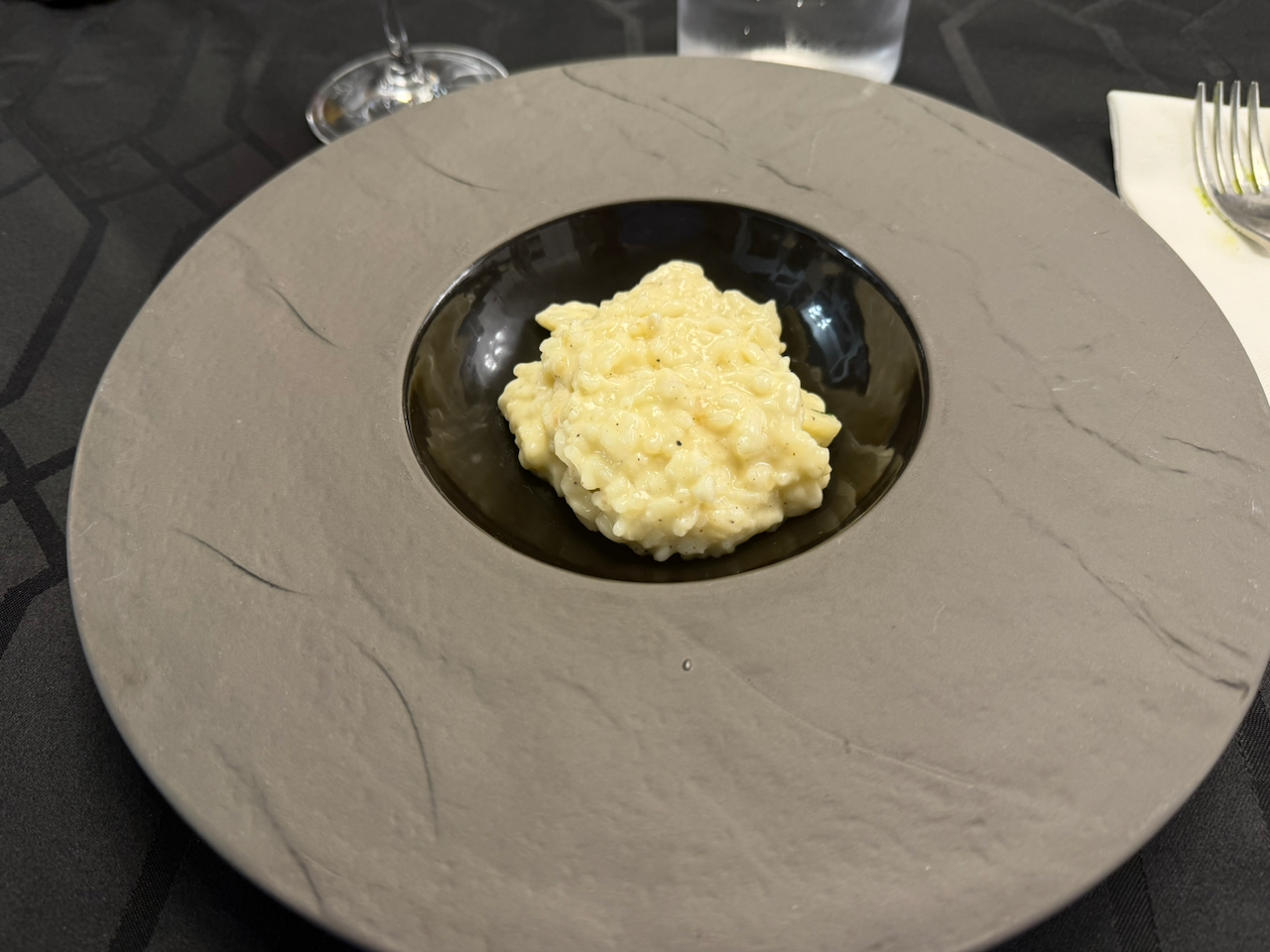
For a multi-course dinner I use a fairly small serving. This is an incredibly rich dish and you really do not need very much of it.
Final Result
This has become one of my favourite adaptations for multi-course dinners.
Making the Parmesan stock and cream is admittedly a hassle and requires starting the recipe the day before. There is also no getting around the somewhat ridiculous quantity of Parmesan involved.
But all of that work happens well before dinner.
Once the Parmesan components are made, the actual risotto is remarkably easy. Instead of standing over a stove for half an hour adding stock and stirring constantly, I can drop a bag into the sous vide bath, deal with another course, and come back 30 minutes later.
The final mixing stage takes only a few minutes and gives you a very rich, creamy risotto with an enormous amount of Parmesan flavour.
It is still not an everyday weeknight recipe, but for a multi-course dinner it solves the biggest problem I have with serving risotto: almost all of the difficult work has been moved away from service.
