A good friend came over for dinner, and since he is very into grilling meats whenever I visit, I decided that I should do something meat-related to return the favour. That idea then expanded into a multi-course meal where every course used a different protein.
I particularly liked how broadly I could interpret the protein theme. When people normally think of protein, they tend to think of red meat, but I wanted to use a variety of things like seafood, eggs, milk, etc. The final progression was egg, salmon, shrimp, dairy, chicken, lamb, beef, and then back to egg + dairy again for dessert.
The details of the menu are below. Unfortunately, I was so busy with the cooking that I neglected to take good photos of the meal. A few of the pics were taken after I had already started eating, which is why the plating looks particularly messy.
Chawanmushi
I wanted to start the meal with something light and also something that people don’t always consider to be a separate protein type. Chawanmushi made an excellent first course because it is egg-based, warm and savoury, but still quite light.
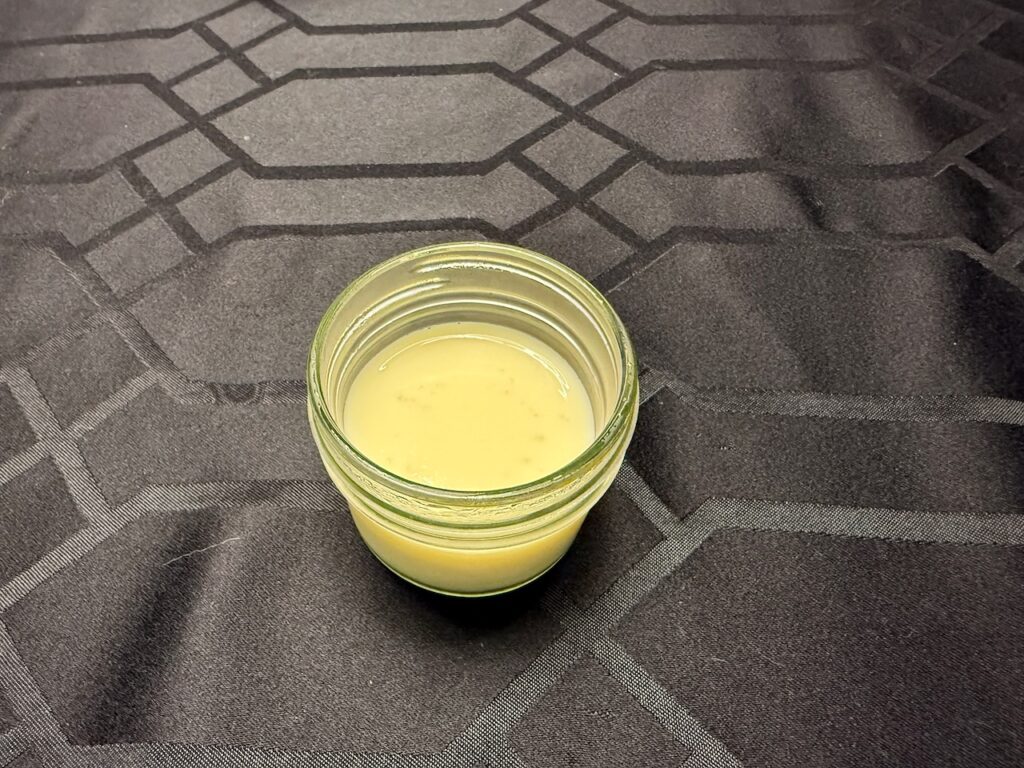
I used the ChefSteps recipe for sous vide chawanmushi, which came out very well. I did experiment with a few different variations of chawanmushi with things like corn and chorizo integrated into the custard, but while the flavour was good, it was very disconcerting to find hard chunks in the middle of the soft custard.
The base recipe is pretty much perfect as-is and is great for a multi-course meal because you can make it beforehand and just have to warm it up for service. I even used store-bought dashi, which makes it one of the simplest dishes on the menu.
Mi-Cuit Salmon
Next up was mi-cuit salmon with horseradish cream and watercress puree. This was based on the Salmon 104 recipe and produces salmon with an almost impossibly soft texture, paired with some store-bought horseradish cream and watercress puree.
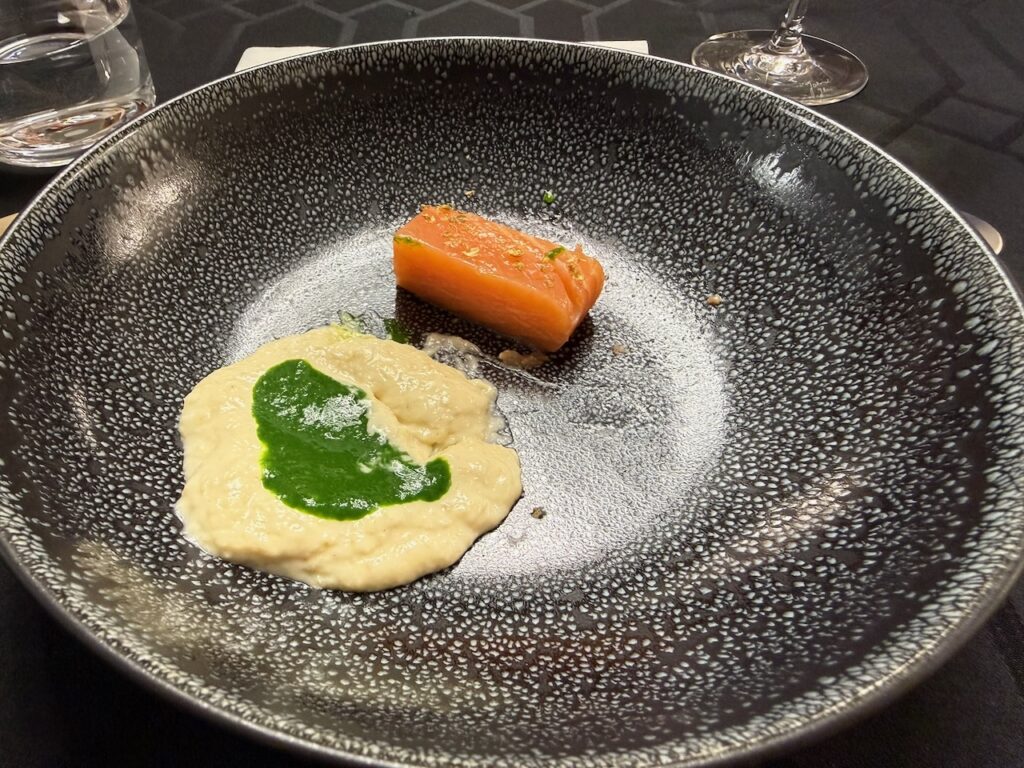
The soft texture of the chilled salmon, along with the pungency from the horseradish and the tang of the watercress, was an excellent contrast. The bright colours led to some fun plating as well.
Garlic Shrimp
I first made sous vide shrimp with garlic and paprika when I was testing dishes for this dinner, but it has rapidly become one of my go-to recipes at home. I have probably made it half a dozen times since then, including for a Super Bowl party.
It requires about 10 minutes on the stove to make the garlic oil. After that, you just sous vide the shrimp in the oil for 30 minutes and you are done.
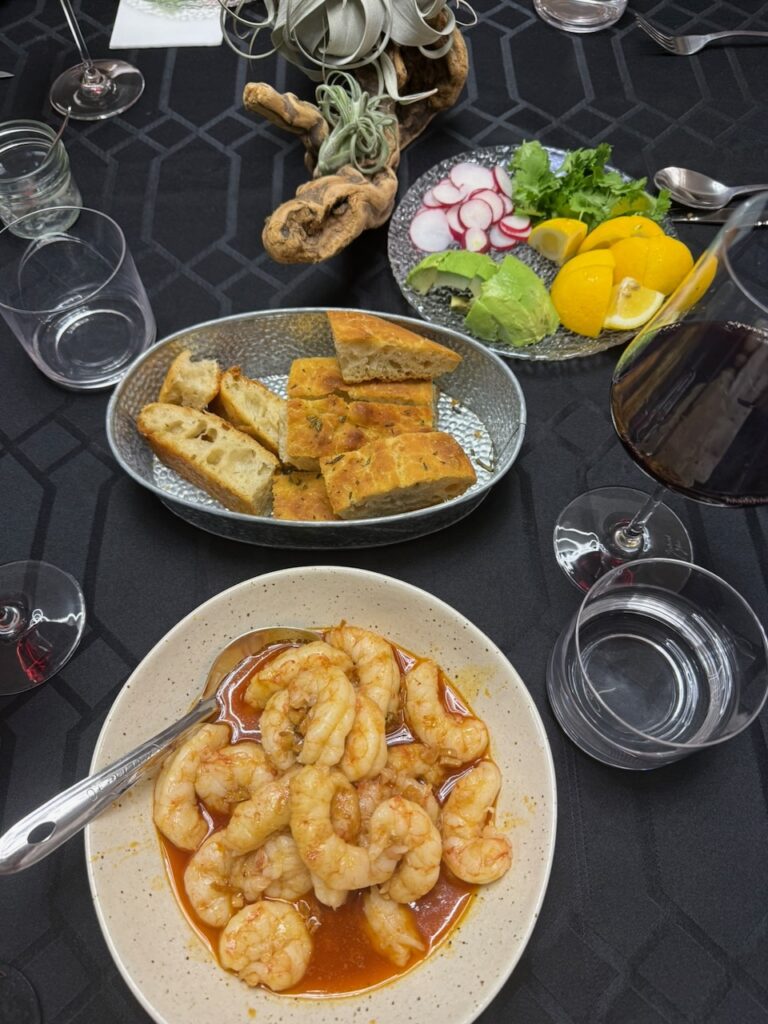
I served the shrimp family style in the middle of the table with both fresh focaccia and taco fixings, so guests could choose their own adventure and have them whichever way they wished.
Massimo Bottura Cacio e Pepe Risotto
Next up was one of the more complicated courses. I have been a fan of Massimo Bottura since I first saw him on Chef’s Table on Netflix all those years ago. I have always wanted to make one of his dishes, and this meal gave me a chance to do exactly that. I decided to make his famous cacio e pepe risotto as the dairy course.
His traditional recipe is very labour intensive and not really well suited to being made in the middle of one of my multi-course meals. Instead, I combined it with a sous vide risotto recipe and came up with a pretty good final result.
I did also run into some blind alleys that I need to document, but I forgot to take pictures of the various steps, so I will have to wait until I make the dish again to document the step-by-step recipe.
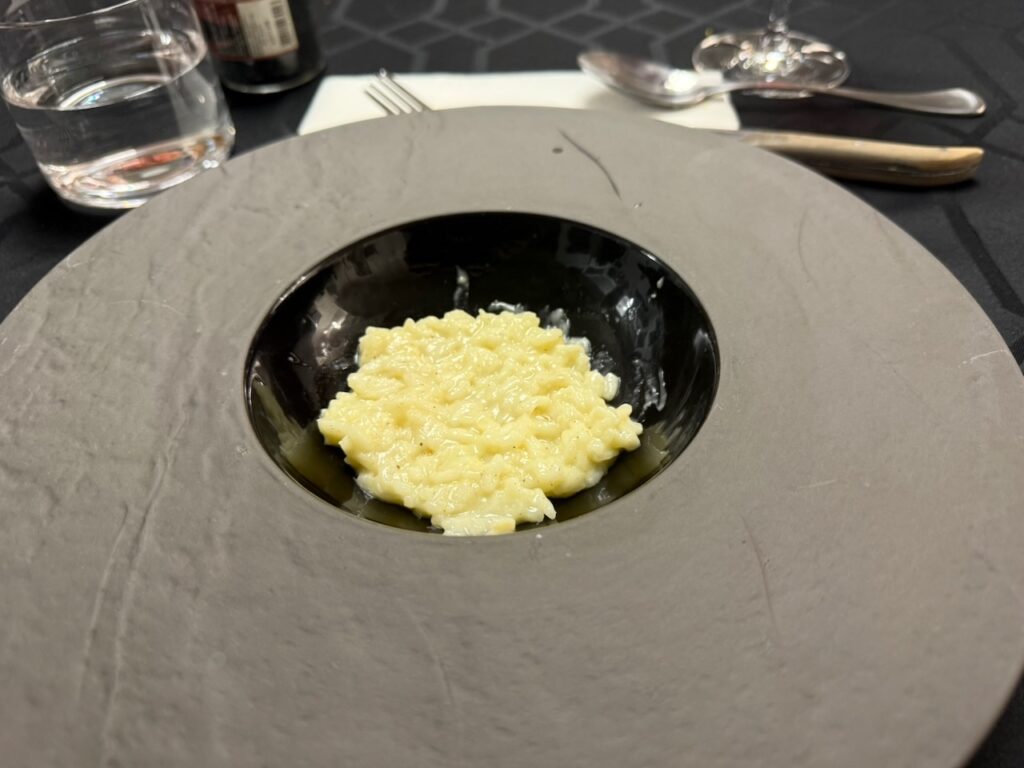
As with all the courses, I kept the serving fairly small as I didn’t want people to get too full. The richness of the cheese means that even a few bites can be quite filling, and we still had several courses to go.
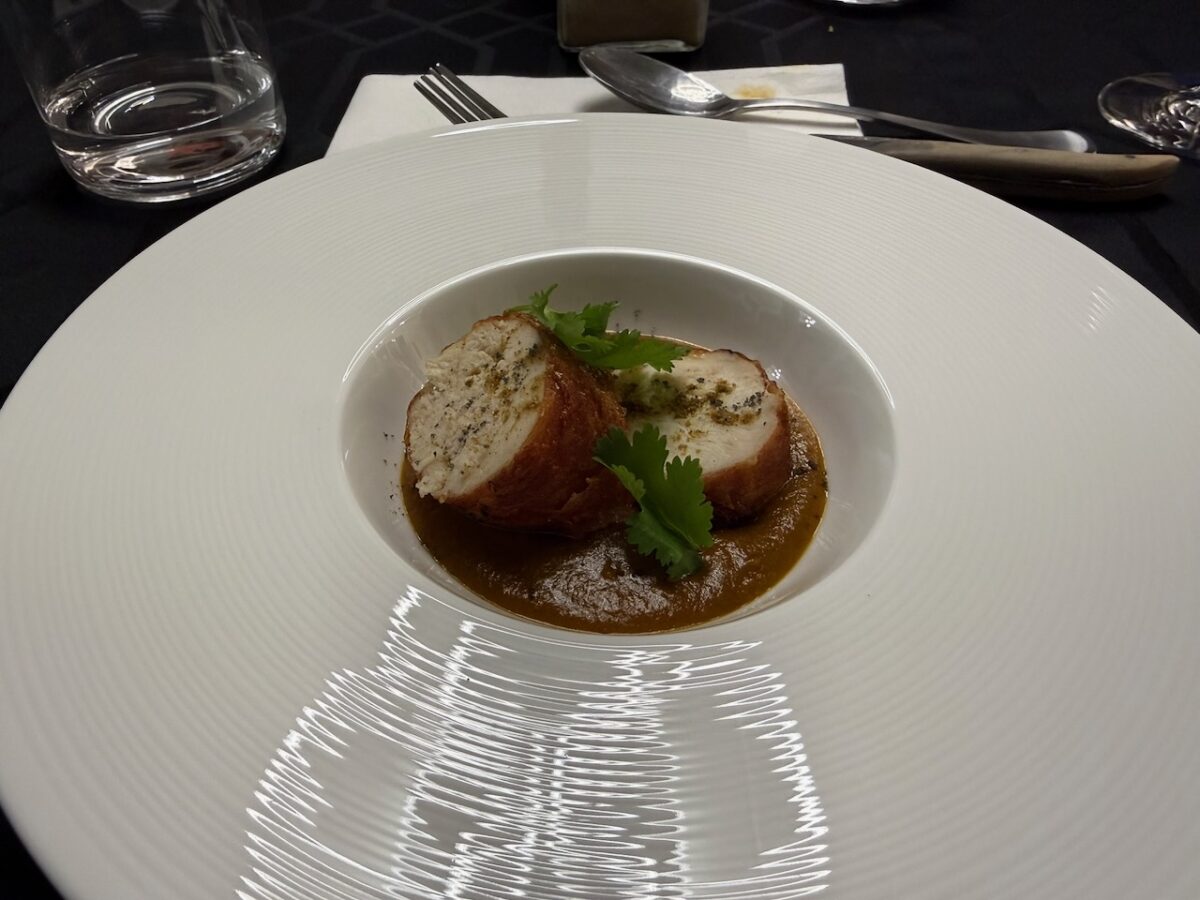
Chicken Tikka Roulade
Now we get to the meat courses. Nithya started it off with a chicken tikka roulade that she first made for our Spheres and Circles menu many years ago.
The roulade is a very impressive thing to look at and really puts people in the mood for fine dining. Pairing it with a traditional Indian chicken tikka masala gravy is also something that most American audiences are not particularly used to.
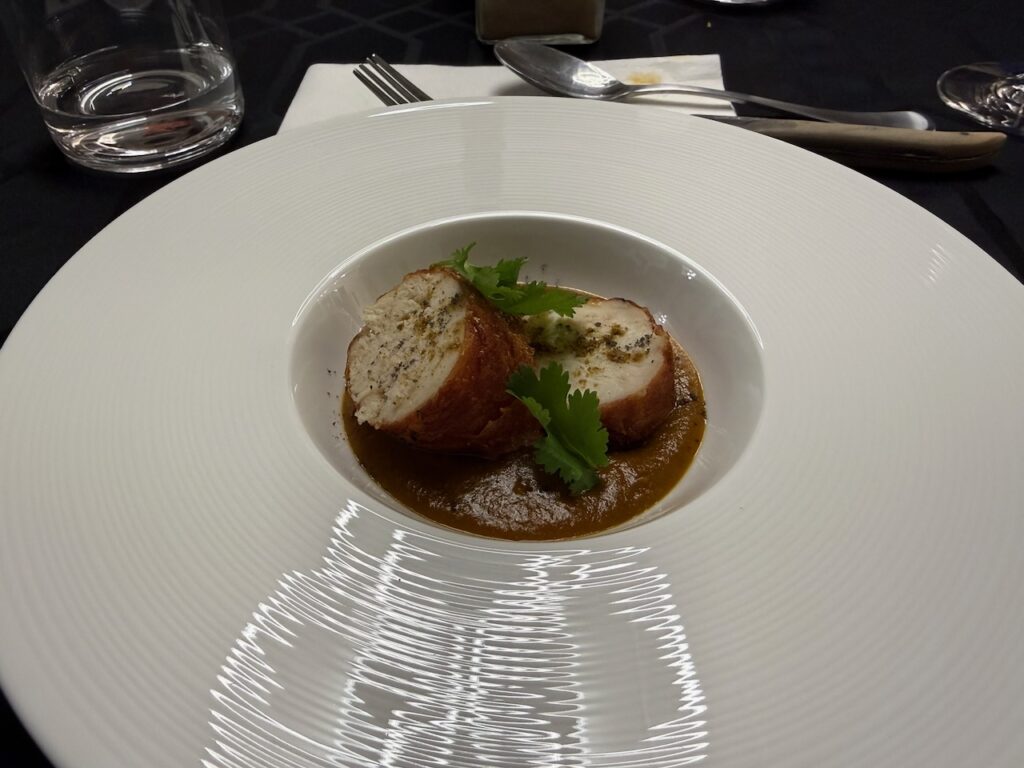
One nice hack that we added this time was to smoke the gravy using a small dish of ghee with a hot coal in it. This added some of the traditional tandoori flavour that would otherwise be missing without a coal grill.
Overall, this was a very successful dish and felt like something Trishna, Gymkhana, or one of the other Indian fine dining restaurants in the UK might serve.
Lamb Chops
The next course was lamb chops with chimichurri and fondant potatoes. This was specifically targeted towards my grillmaster buddy, as he loves grilling lamb chops. I have been telling him to try the sous vide path, so I decided to do the chops sous vide to help make my case.
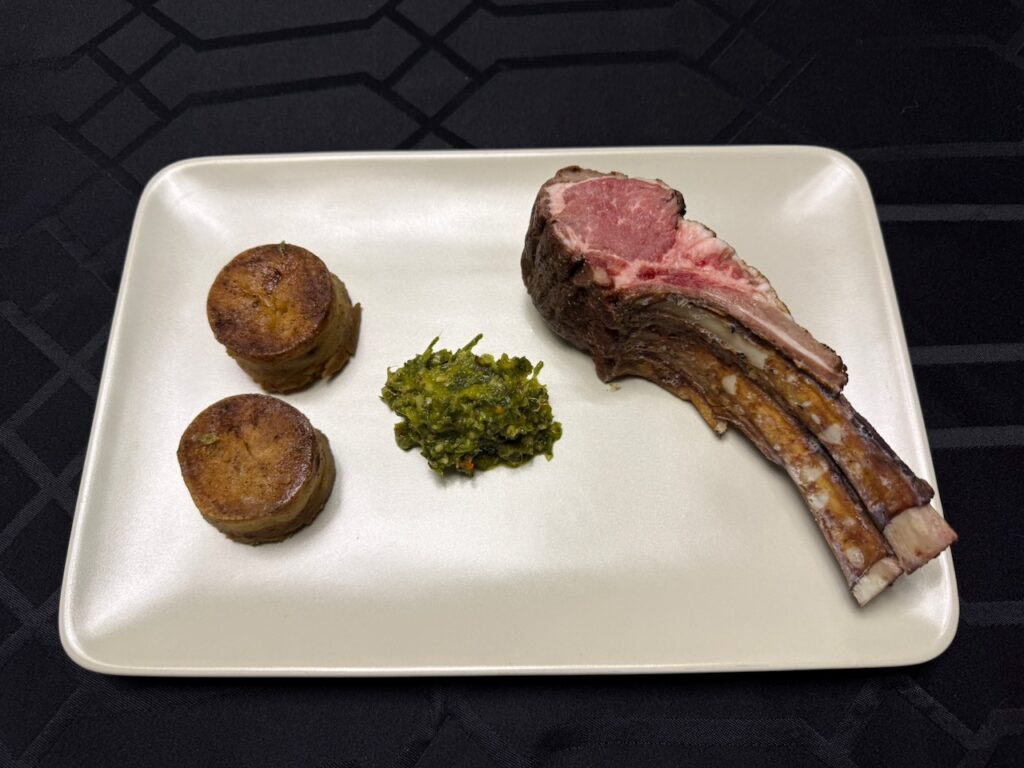
It took 90 min at 55°C to cook the lamb, and then I had to figure out the best way to get a sear on it. Since I don’t have a grill, I needed to find the best way to transfer heat into the surface of the meat as quickly as possible without overcooking the perfect medium-rare insides.
After a lot of research, I decided to go with a combination of a ripping-hot cast iron skillet and a blowtorch to simultaneously hit multiple sides of the meat. The torch does a great job on the uneven surfaces, while the skillet works well on the fat cap and the larger meaty sections. This was my first time using both simultaneously, and while it worked well, I recommend doing this in a very well-ventilated area or else the whole house will smell of smoke.
The rack was then carved and served with fondant potatoes and chimichurri for some acidic brightness.
Daniel Boulud Short Ribs in Red Wine Sauce
The final savoury course was Daniel Boulud’s recipe for short ribs in red wine sauce with celeriac puree.
This dish braises beef short ribs in a red wine reduction for about three hours, until the beef is almost falling off the bone. You then refrigerate the beef and sauce overnight so you can remove the fat, filter the sauce, and reduce it again until it is thick enough to coat the back of a spoon. The beef is then warmed back up in the sauce before being served on a bed of celeriac puree.
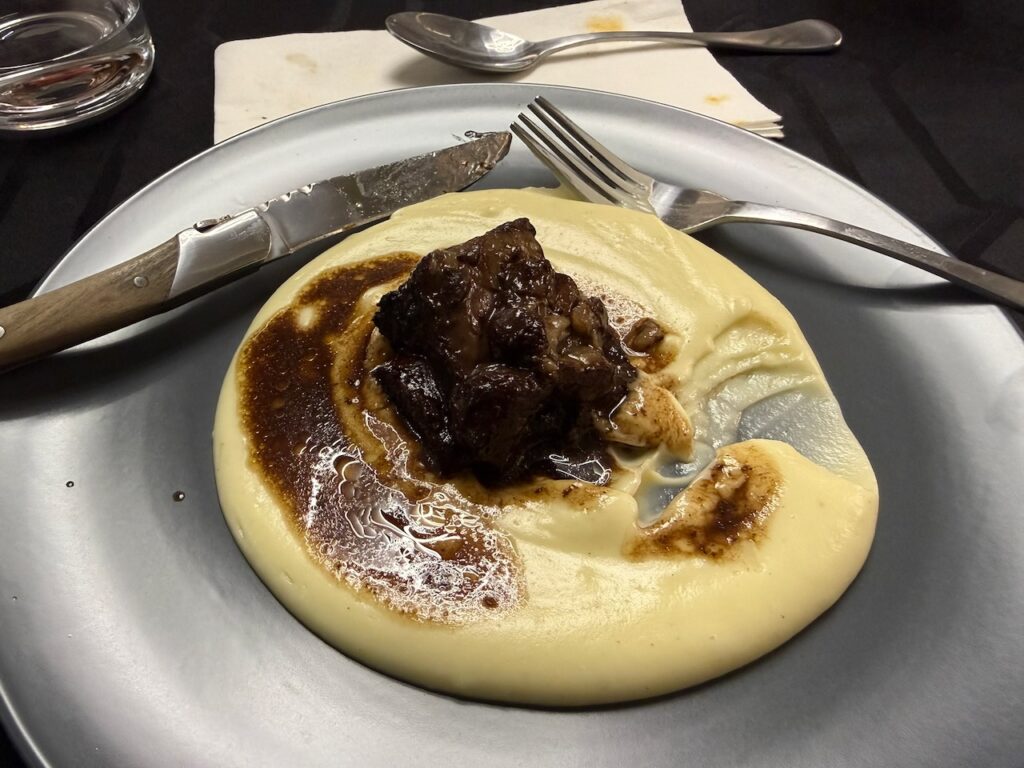
The beef is incredibly tender, and the richness of the sauce plays well with the celeriac puree, which is a lot lighter than mashed potatoes.
This was likely the longest-cooking, most involved, and most expensive dish that I have ever made at home. There are several versions of the recipe floating around online, and I ended up combining elements from a few of them. I did take a bunch of notes and photos as I went, so I will post the version I followed in the coming weeks.
The results are incredible, but I’m not sure I would put in that much effort again for a single course in a multi-course meal. They would make an excellent centerpiece for a family-style meal for something like Thanksgiving, where the amount of work feels a little more justified.
Caramel Flan
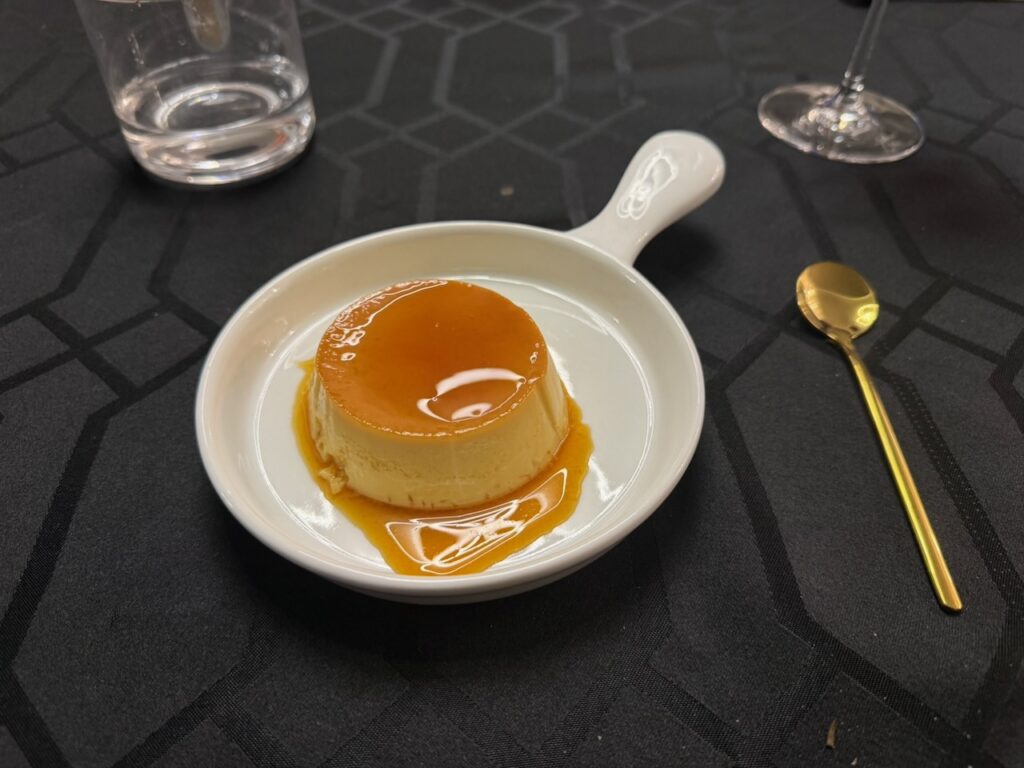
We finished with flan that Nithya made. It is one of her signature dishes and uses both eggs and milk, so it fits the protein theme perfectly. As one of our guests pointed out, we had both started and ended the meal with a custard, which gave the menu a nice symmetry.
Overall, the protein theme worked quite well. It was specific enough to give me a framework for planning the dinner without forcing all the courses to taste similar. The progression from custard to seafood to meat gave the meal a fairly natural structure despite the theme being somewhat arbitrary.
I do have some things that I would change if I were doing this again. Soy protein, mushrooms, and pork are some of the things that I skipped, and I already have some options in mind if I end up doing this theme again.
